From Kolasib to Delhi, Indian Sportswomen Make History
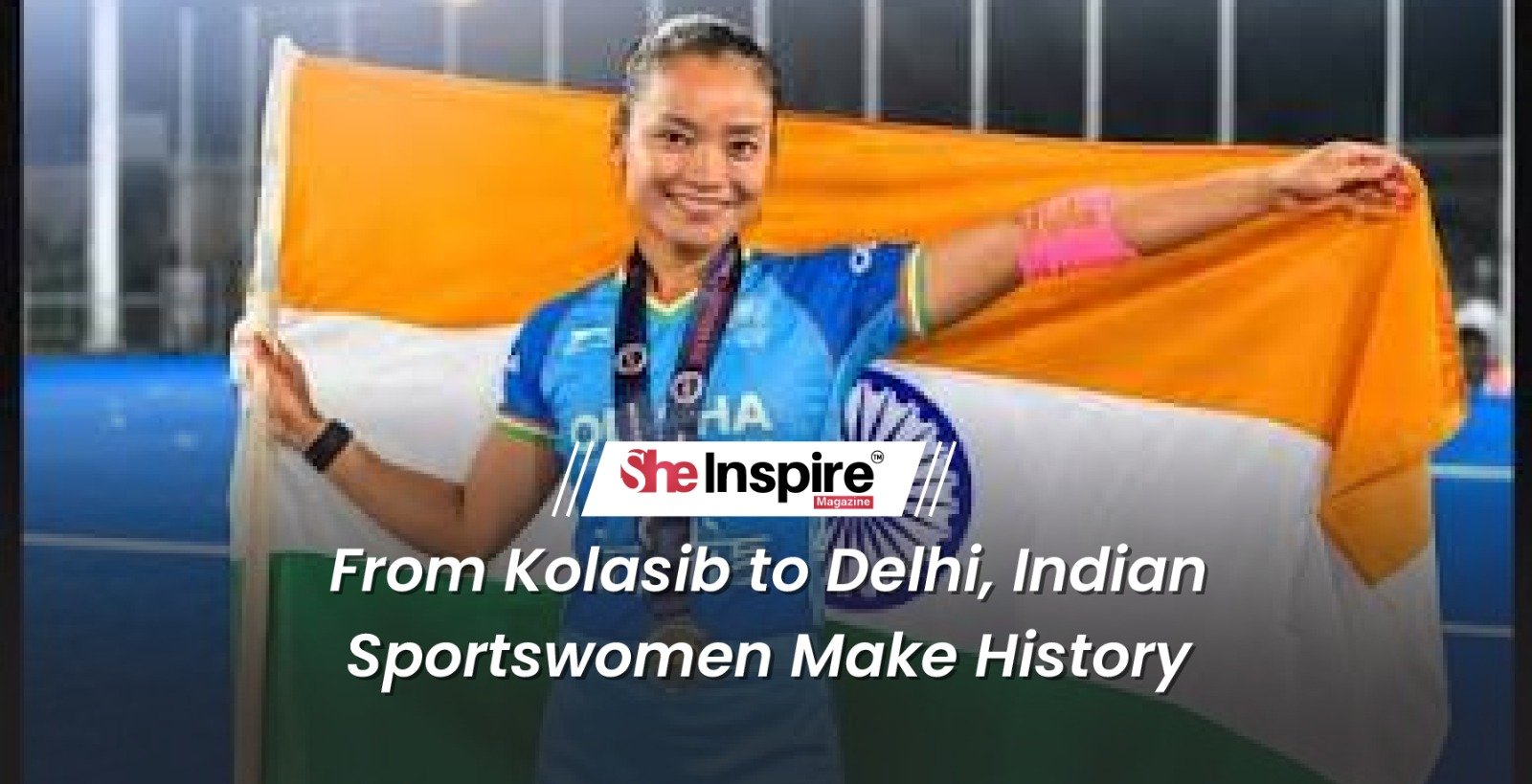
Who decides which town gets to produce a winner of a national sporting honour, and why did so many people assume it would never be one in the hills of Mizoram? On 13 November 2026, Friday, Lalremsiami Hmar from Kolasib went to New Delhi's Rashtrapati Bhavan and was awarded the Arjuna Award by the then-President Droupadi Murmu, the first-ever person from Mizoram and 1 of the 17 athletes who were selected for the 2025 awards by the Ministry of Youth Affairs and Sports. Her selection had been announced on 18 August, but seeing it happen in person made it real for a state that had never had one of its sportspeople standing on that stage. She is a 26-year-old forward in Indian women’s hockey and an Olympian, and she comes from a town about eighty kilometres from Aizawl, close to the Assam border, where nobody could have guessed that a farmer’s daughter with a hockey stick would one day join the ranks of women trailblazers in India celebrated in the capital. Her story is not in her document nor in her medal but in how much burden a girl carries before her country finally announces her name.
From a Farming Family in Kolasib to the Hockey Fields of Delhi
Lalremsiami was born on 30 March 2000 into a farming family and grew up speaking Mizo, playing on whatever ground the town could offer. At eleven, she was selected for the state government’s hockey academy at Thenzawl, and five years later she moved to the National Hockey Academy in Delhi, a city with a different language, different food and a very different climate from the hills she knew. Picture a teenager making that journey, away from her family and her own people, with only her belief in the game to hold on to, and it becomes clear that this award did not begin in 2026; it began on the day she agreed to leave. Her family and community celebrated the chance, and that support stayed with her. She made her senior international debut in 2017 and in 2018 won silver at the Asian Games, which made her the first sportsperson from Mizoram to win an Asian medal, and a town that had never had such a name suddenly had one to cheer for.
This is the clip that many fans will remember forever: Her father, Lalthansanga Zote, died in the middle of the FIH Women's Series in Japan in 2019 when the Indian women's team was there to qualify for the Tokyo Olympics. Lalremsiami decided to remain with the team, to play on, to hold her grief in one hand and a hockey stick in the other. Imagine the strength that takes, and it's a measure of how much she clearly loves her teammates and her country. India won the series and qualified for the Games, and she became the first woman from Mizoram to play at the Olympics.
Why One Award Means More Than One Name on a List
At Tokyo, the team finished fourth, missing a medal by the thinnest of margins in what remains the best Olympic run in the history of the women’s side. She carried on with a bronze at the 2022 Asian Games, Asian Champions Trophy titles in 2023 and 2024, and appearances at a host of World Cups, and she has also taken to coaching at the Mizoram Department of Sports and Youth Services, so all she learned at sessions in Delhi and abroad has been returned to the place it all began. A career like that is not built on luck; it is built by someone who consistently turns up in front of crowds that have not always understood the game, and it was homegrown on a state-run academy, as much a result of what one carefully placed programme can do for a town as it is of what some people did as teenagers.
After the ceremony, Lalremsiami said the honour carried a special meaning for her home state and that she hoped it would inspire young players, adding that parents and children often tell her they want to take up hockey when she visits Mizoram. That is where the real worth of a first lies, because a first only matters if it makes the second and the third easier, and it is a little sad that athletes from the Northeast have so often had to wait longer for the attention that others received without asking. It is good to see that wait ending for Mizoram. There is a girl in Kolasib or Thenzawl somewhere who has a borrowed stick and a big dream, who can now point to one of the true women icons of India from her own soil who fronted the President of India, and her dream is no longer a fantasy and has become a direction.