
A ten-year-old from Karwar enters the record books
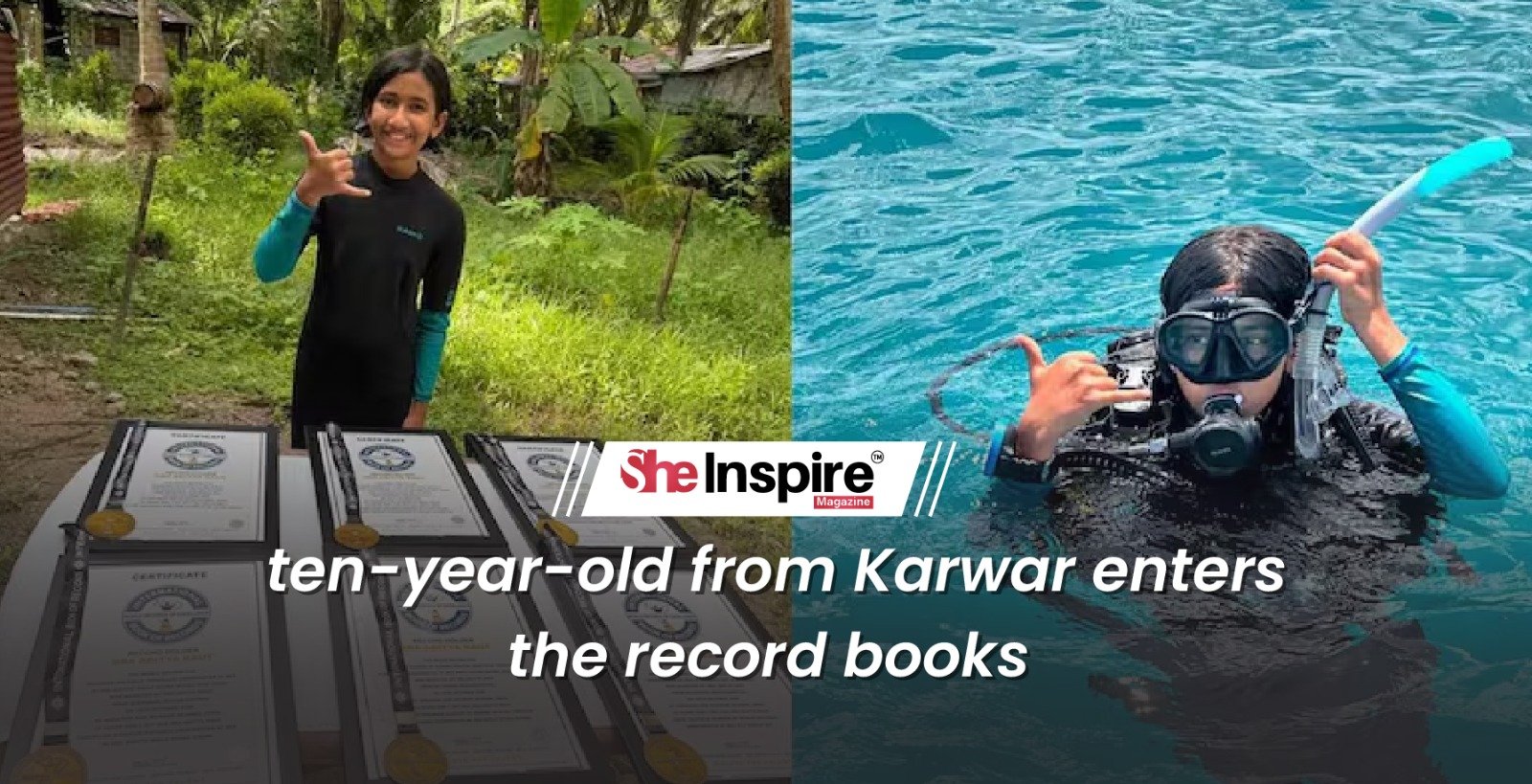
Think about what kids of ten usually do after school. Then see Ira Aditya Raut of Class V, Naval Children School, Karwar, who dived at Shaheed Dweep of the Andaman and Nicobar Islands and broke six world records and put smiles on every face. She didn't go down amid loud announcements or crowds of cameramen; she simply grabbed her gear, went down and did what she had practiced. She came up after a day below the waves as the youngest qualified scuba diver in the world, certified at ten years, seventeen hours and thirty-five minutes old, so precise it sounds like she must be older, yet young enough to be genuinely touched at her memory. She got her certification from Scuba Schools International and her records from Arvinder Singh Bhatti of the International Book of Records; there's no question about what she achieved. But what remains in the mind is not merely her age but the way it makes one stop and ask oneself why we so often see something as too difficult, too risky for girls before they have even tried it.
A Child, a Mask and Six Records Before the Day Was Over
The records were not six variants of one trick, and that is why they are so amazing: the record for participants under the teenage age group who scored the most number of scuba hand signals in one minute, recognized the most number of scuba equipment during underwater, and traveled the farthest underwater in a minute. She named the most number of species of underwater animals in one dive, and if you total all these records up, Ira ended up holding the record of six world records in one day! Hand signals are the only way a diver can communicate below the water, so communicating them fast and accurately with a mask in your face and the weight of the water all around you takes a calm heart over powerful arms, and this is not usually what you expect from a child. Naming equipment and fish in the middle of a dive requires the same kind of still mind because you just do not have the time to panic and run out of air, and her mind was as steady as her hands.
She kept it matter-of-fact about that day: "It was quite fun when we were diving underwater. I was glad to set this record at a young age, and I want to keep on learning more and seeing more of what is underwater." There's no hint of a kid desperately craving fame there. All of the starry-eyed little kid chasing something in that statement, and the marine species record suits that part of the story perfectly, because it takes a kind of curiosity that's truly admirable to sit down on a reef and give a shit what each animal's called. We could use so much more of this kind of curiosity in our girls, and we could use so much more of allowing them to keep it a little longer, before the world begins to inform them about what is suitable for them.
What a Family of Sailors Gives a Daughter That Many Girls Never Get
Ira is from an Indian Navy family, so the sea was never a topic of taboo at home. She is also the daughter of Commander Sneh Budakoti and Commander Aditya Raut, who are also serving. Her grandfather, retired Commander Ashok Rajaram Raut, was in the service. From the Buldhana district of Maharashtra, far from the sea, the family travelled from one Naval School, Karwar, to the watchful blue seas of Shaheed Dweep- and how far can a child go when everyone around keeps saying yes? Children of service families are conditioned from the beginning to change cities and schools without so much as a murmur, and perhaps that discipline of adaptation, a relaxed equanimity, was the secret to her calm through her ordeal with the water. How many young girls grow up in this country listening to the constant no's that water is dangerous, sports fields are for boys and adventure is not for girls, and then squander their potential in the period of time between the first 'no' and the tenth? Of course diving isn't child's play and her records were set with detailed coaching and at the Dive Tribe Centre, in the same way every little diver should be cared for.
Ira was brave and the grown ups turned the ocean into her classroom deserves thanks. Her story might persuade other families to give their girls a first swimming lesson, a first snorkel or a longer spend on the beach in the evening without a voice in their ears, and it may also remind schools in coastal towns that the sea just next door is as good a teacher as any chalkboard. The girl who has seen reef up close will care for it all her life, and a land with a coast as long as ours needs more children who do, making moments like this stand out among women's real-life success stories. A Class V student at the moment with a certificate in her hand, a pile of sheets, and one long list of places to see; but it is the journey that will be interesting to watch.