
Three Women Judges Mark Progress In Supreme Court
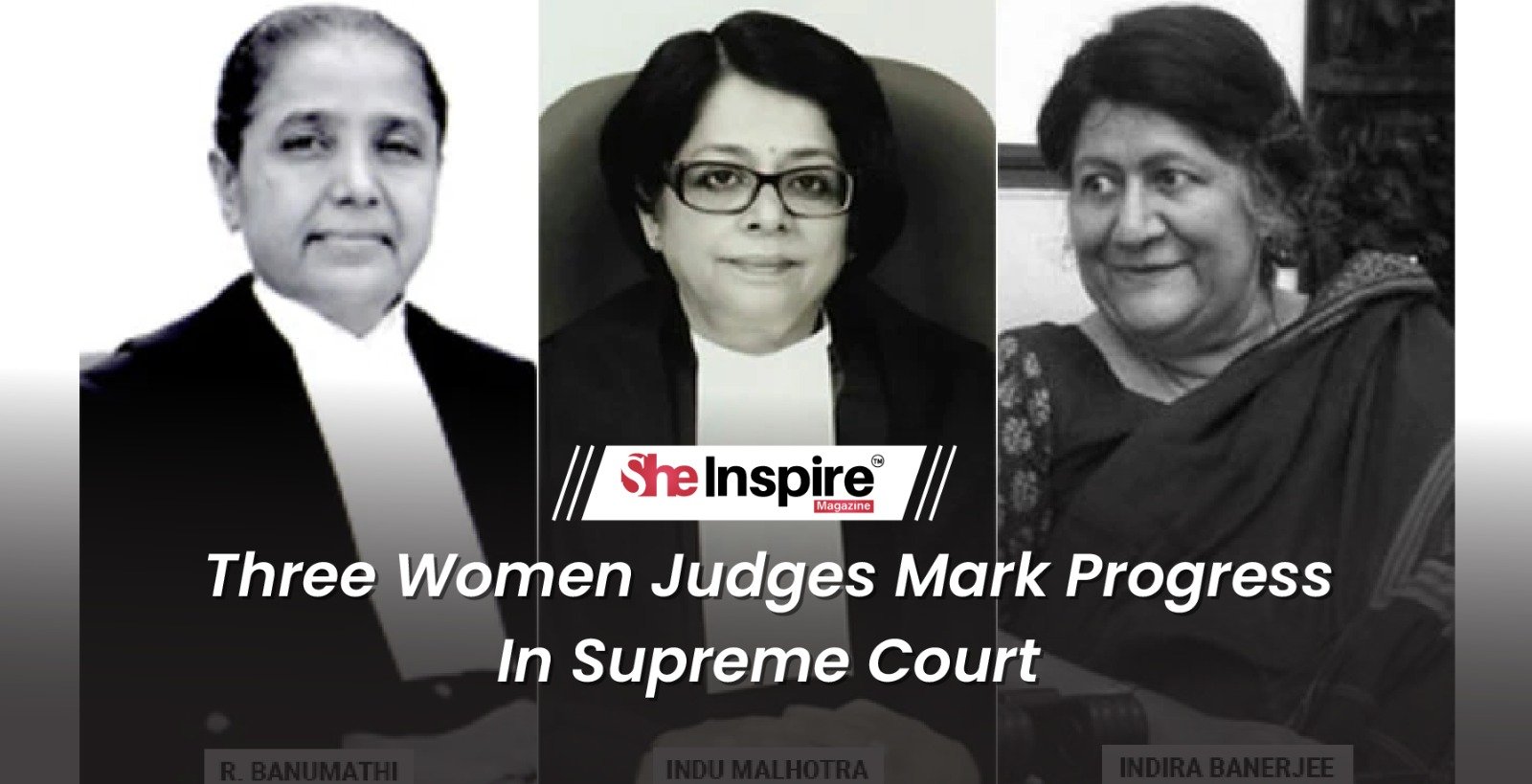
The 6 October oath ceremony was held for a good reason, though. The court's working strength touched 37, the new sanctioned strength, which is one below the number of judges now taking oaths after three High Court Chief Justices were sworn in for the first time, since the Supreme Court was established in 1950, in the afternoon. Inside those figures sat a quieter change. With Justice Sunita Agarwal’s elevation, the number of women on the bench went from two to three. For anyone following women judges in the Supreme Court, the day offered a fresh headcount and a good moment to ask how it came about.
A Bigger Court and the Women Who Reached It
The court grew first. Meanwhile, an amendment Act passed in 2026 increased the total sanctioned strength to 38, and the Collegium instantly proposed Agarwal and two others on 28 September, with the Centre approving them in a matter of days. They were three former sitting High Court Chief Justices -a natural progression - and Agarwal was fourth in the all-India seniority list of High Court judges. Justice Sunita Agarwal was an Allahabad High Court judge in 2011 after 21 years of practice, and then headed the Gujarat High Court from July 2023. Her name appeared on the state court's published list of women judges, and she was its thirteenth woman to have ever been appointed. Her oath was administered on 6 October, on the same calendar day that Fathima Beevi was appointed as the first woman to sit on the court in 1989.
She joins two colleagues who reached the bench by very different roads. Justice B V Nagarathna has been a Judge since August 31, 2021, and Justice V Mohana was appointed on June 2, 2026, as a seasoned Senior Advocate of the Supreme Court himself. Mohana is only the second woman to be elevated directly from the Bar. Three women among 37 judges is about 8% of the bench, an improvement on two but still a small share—a crucial step forward for women breaking barriers in India. As recently as March 2025, only 11 women had ever been appointed to the court since its founding, which shows how a single oath can shift the picture, in either direction.
A Short Road to the Top and a Long Road Behind It
The most watched name is Justice Nagarathna’s. Seniority points to her as the first woman Chief Justice of India, and an earlier report put her tenure at 24 September to 29 October 2027, barely five weeks. A first woman CJI would arrive with almost no time on the clock to shape the court. This is why those who have come before are just as significant as the woman herself. Her term in office may be a short one, but the number of women standing in line behind her will be the determining factor as to whether or not her milestone is duplicated or shrugged off as a tale of just one.
High courts are where those names come from, and they have been producing women leaders. Lisa Gill became the first woman Chief Justice of the Andhra Pradesh High Court on 25 April 2026, and Agarwal herself held the top post in Gujarat for more than three years before her elevation. The stream is real, though narrow, and the Collegium’s choices from it are the part that can change quickly. This was the second woman recommended by the Collegium under CJI Surya Kant, after Justice Mohana, which suggests a pattern. A pattern, however, is never a promise, and the very bench with unoccupied seats is what defines a pattern. Every time the pipeline leaks a qualified woman, and every time it doesn't, the pipeline gets thinner or thicker, respectively.
Numbers like three of 37 can feel too small to celebrate and too real to ignore. A bench doesn't have to reflect the land to be just; it should reflect those who sit in front of it, and for most of the court's living memory it has not. Fathima Beevi got her seat in 1989, and Agarwal took her oath in 2026; they were 37 years apart on the calendar, and the gap is brutally clear: change has definitely come, but it has come glacially.