Sonali Mishra Retires, Marking Quiet Milestone For Women
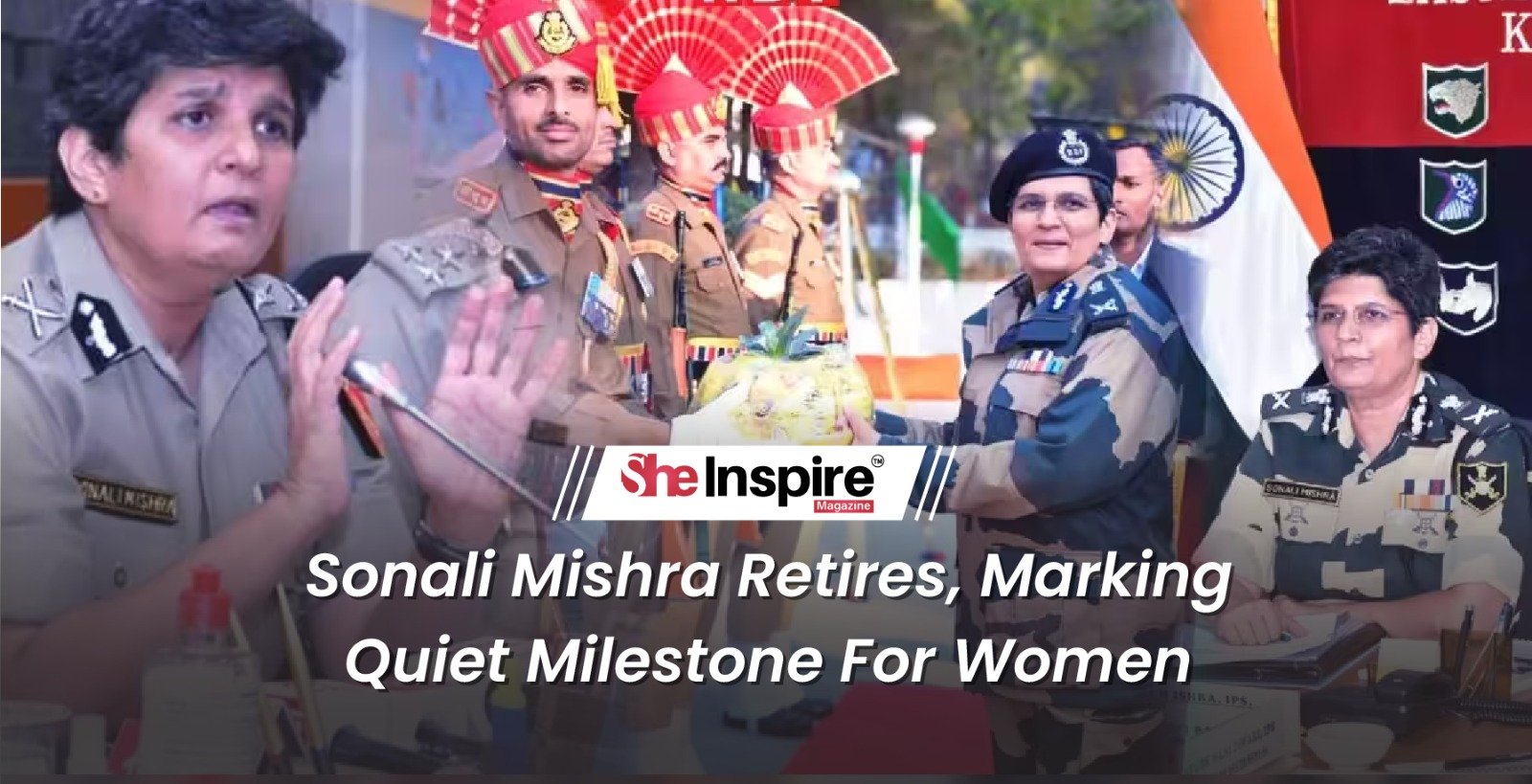
Sonali Mishra's term will conclude on October 31, after more than three decades in uniform, as head of one of the biggest police forces in the country. On August 1, 2025, Sonali Mishra (1993-batch IPS), Madhya Pradesh cadre, was elevated as the Director General of the Railway Protection Force, the country's top armed security force. As the date arrives, the news is uninteresting, apolitical, scandal-free – just another date on the calendar. That predictability is exactly why it is worth noticing: a quiet milestone defining female leadership in India. Institutional openings are always appreciated inward; they show what a breakthrough really changed outward.
A 143-Year-Old Force and Its First Woman at the Top
At present, the Railway Protection Force is a mammoth organization working under the Ministry of Railways. Every day, this paramilitary force has to keep hundreds of trains, property, dense stations, and thousands of passengers protected from threats. The force is not a new one; it was actually established in 1881 as a watch-and-ward type organization for private rail networks. It acquired the present statutory position after the enactment of the RPF Act, 1957. In all its 143 years, Sonali Mishra was the first woman to be appointed to the post of Director General. She stepped into the office of the DG after her predecessor, Manoj Yadava, retired on July 31, 2025. Before stepping into this role, she served in Madhya Pradesh as the ADG for selection and recruitment. While working in the state, she was also at the head of the Police Academy and the State Police Training Institute in Bhopal. In her career, she received the President's Police Medal for Distinguished Service as well as the Police Medal for Meritorious Service.
On the day she took charge, official statements praised her as a "professional and a leader," while Mishra spoke of vigilance, courage, and service to others. Those are the usual words for an inauguration, and they say little about how demanding the job is, with a vast rail network and a crowd of travellers that never thins. One of the initiatives listed under the "work" section of the force's page is Meri Saheli, which addresses women traveller safety, a caution that, for many women, the station platform is a place where their safety in public is examined regularly.
What Stays Behind When A Pioneer Retires
The women who go first tend to be measured twice: on how they did the job, and on whether anyone follows. No public scorecard exists for Mishra’s year in the post, and a fair account will have to come from the people who worked under her. What can be said now is that she is not the only woman to cross a threshold in Indian policing. Archana Ramasundaram, who served 37 years in the IPS until 2018, was the first woman police officer to lead a central paramilitary force and the first woman inducted as an additional director in the CBI. That is the sequence you have seen before in these stories. A first occurs, is celebrated, and oftentimes by the time a second occurs, it is well past. Sometimes, a first system did not lead to a second.
A first proves it can be done; a second proves it should be done. That question is attached to every pioneer’s retirement, and the next appointment will answer it, not the farewell. Women IPS officers in India fill the ranks that feed top posts like this one, and the real measure of this milestone is how many of them now look at the director general’s office and see it as reachable rather than exceptional. Mentors matter in that equation, and so do the junior women in the force who watched a woman give orders from the top and absorbed what that makes thinkable, whether or not anyone intended the lesson.
Mishra’s term will end on schedule, and the force will carry on, as forces do. What lingers is smaller and longer-lasting than an announcement: a precedent in the record, a path younger officers can point to, and a standard against which the next appointment will be quietly judged. She Inspires Magazine will be watching to see who walks into that office next, and what it says about whether a first becomes a beginning.