
She Negotiated the Deal: India’s First Women-led FTA
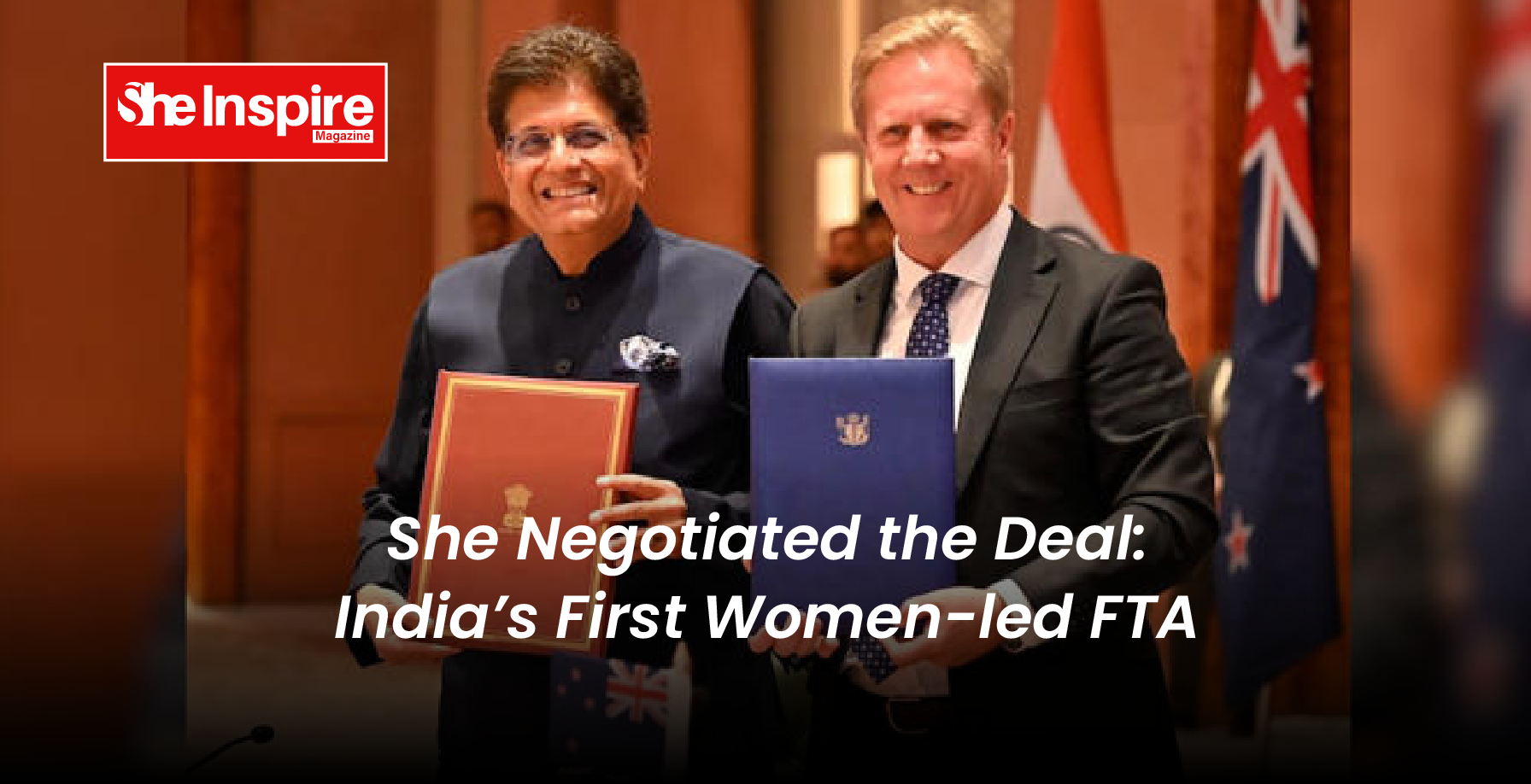
When India and New Zealand signed landmark Free trade Agreement the headlines were impressive – but the real story was the team behind the table.
The India- New Zealand free trade agreement (FTA), signed on April 27,2026, is recognized as India’s first “women - led” FTA. The women who spent 9 months in negotiating chambers, building the legal architecture of a pact that promises to reshape bilateral trade for decades. The negotiation team composed of women, including the chief negotiator, deputy negotiator, sectoral leads and India’s Ambassador to New Zealand- a group that gave the deal a rare gender – focused edge in Indian Trade history.
“This agreement is about building trade around people- for our farmers, our entrepreneurs, our students, our women, and our innovators”
- Piyush Goyal, Union Minister of Commerce & Industry
The agreement was signed in New Delhi by India’s Commerce Minister Piyush Goyal and New Zealand’s Trade Minister Todd McClay.
The agreement covers 20 chapters encompassing trade in goods, services, investment, dispute settlement, and legal provisions. It eliminates duties on 100 percent of Indian exports to New Zealand, a provision that industry groups have called a transformative win for labor – intensive sectors.
It places special emphasis on strengthening micro, small and medium enterprises- with focus on women – owned and youth – led startup.
How this trade benefits the women
· Textile and leather gain benefit industries with high female employment share
· Export programmes with specific focus on women – led enterprises
· New Zealand study and work visas open door for women in IT, healthcare and education sector.
New Zealand has committed to at least 5,000 temporary employment entry visas for skilled Indian professionals in occupations like- IT, Healthcare, Education, Engineering, Construction and traditional field like Yoga Ayurveda, Indian cuisine and Music education. In addition, 1000 working holiday visas annually offers young Indian women a route to live and work in New Zealand for up to 12 months at a time.
This shows women’s economic leadership, that runs deeper than the deal contents. India’s most consequential trade negotiation of recent years was steered by women- from the chief negotiator ‘s chair to the ambassador’s office- represents a signal about who shapes global commerce when given the opportunity.