
Joseph Vijay Chandrasekhar, the man set to break the records in Tamil Nadu History
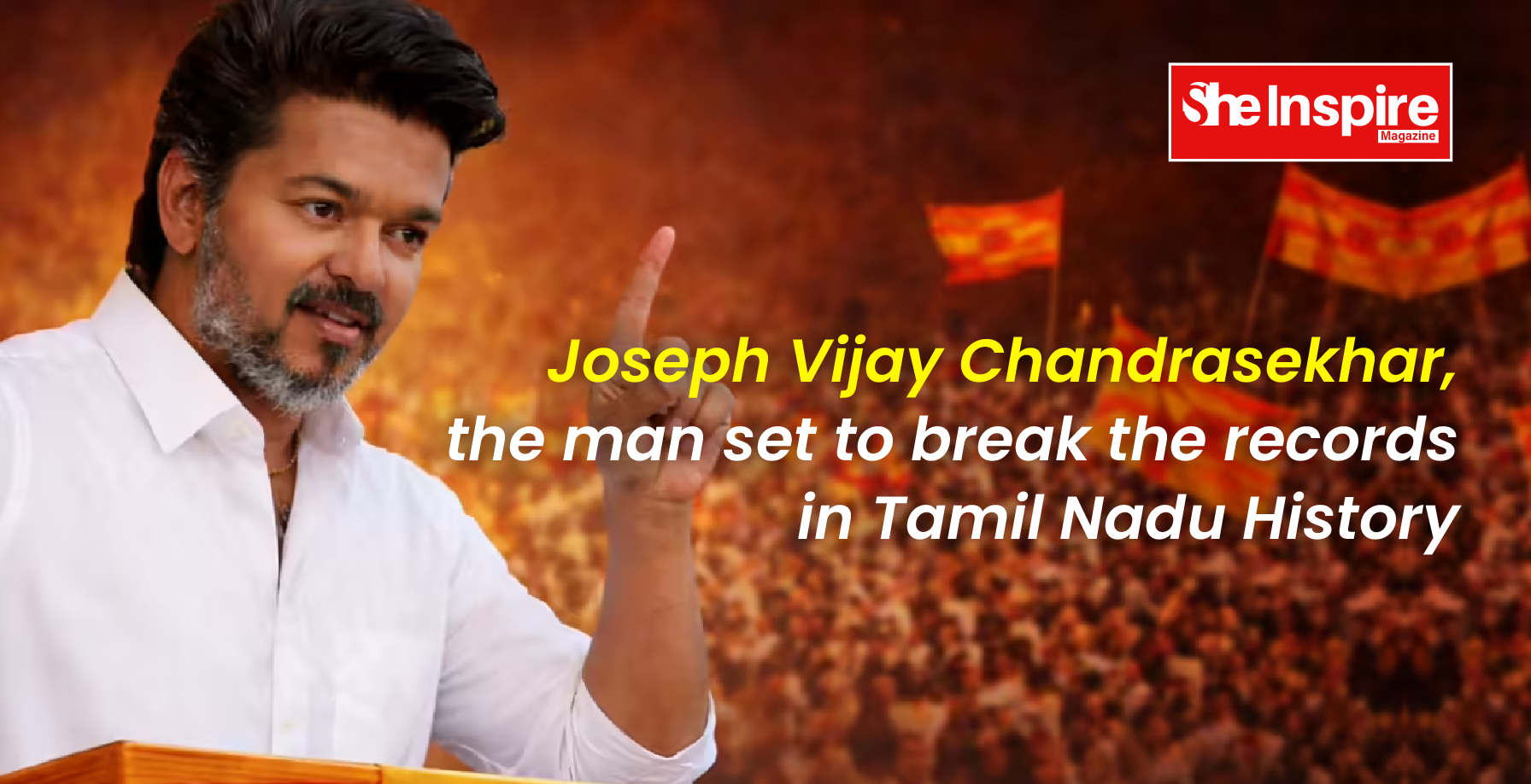
From Thalapathy to Chief Minister
How Joseph Vijay Chandrasekhar transformed three decades of screen dominance into the most stunning political debut in Tamil Nadu modern history.
Born into the lens
The story of Vijay begins in Madras on June 22, 1974- not in obscurity, but in the heart of Tamil cinema. His father, S.A. Chandrasekhar, was film director, his mother, Shoba Chandrasekhar, a playback singer. The set was his playground before it was his office.
His first screen appearance came in 1984- not as a hero, but as a child artist in his father’s film Vetri. When he finally stepped into a lead role with Naalaiya Theerpu in 1992 at the age 18, the film sank without a trace. It was an inauspicious beginning for a man who would one day be called as Thalapathy.
The making of a mass hero
The mid- 1990s changed everything. Poove Unakkaga (1996) cast Vijay as a romantic hero with genuine screen chemistry; Kadhalukku Mariyadhai (1997) earned him his first Tamil Nadu State Film Award for Best Actor.
“His appeal was rooted in relatability. He was not an untouchable superstar from the outset- audiences grew with him.”
Then came the decisive shift. Thirumalai (2003) and Ghilli (2004) transformed Vijay into something harder and more galvanizing an “angry young man”. His characters began taking on systemic injustice: corrupt officers, corporate exploiters. The fiction was a rehearsal for politics.
Screen as political stage
Tamil cinema has long been a conveyor belt to political power- M.G. Ramachandran, Jayalalithaa, Karunanidhi all understood the connection between mass cultural authority and electoral muscles. Vijay’s films, however, were unusually explicit in their political messaging. Kaththi (2014) targeted corporate land acquisition. Thalaivaa (2013) - whose tagline- “Time to lead” alarmed CM Jayalalithaa’s government – was released only after legal battles.
The nickname Thalapathy- commander- was not accidental. For two decades, Vijay’s fans had been rehearsing a language of loyalty, command, and transformation. The fan clubs became the seed of something far larger.
Building the machine
In 2009, Vijay formalized his sprawling fan network into Vijay Makkal Iyakkam- “Vijay’s People Movement”- bringing roughly 85,000 fan clubs under a single umbrella welfare association. The organization was calibrated carefully: when it contested local body elections in Tamil Nadu in 2021, it won 115 of the 169 seats it entered. Political observers took note.
On February 2024, Vijay formally launched Tamilaga Vettri Kazhagam (TVK) – the “victory party of tamilakam”- and announced his retirement from cinema.
The earthquake of May 4, 2026
TVK contested all 234 seats independently – no alliances, no safety net. When counting began on May 4, the results were staggering. TVK emerged as the single- largest party in early trends, has won 107 seats. TVK broke DMK stronghold across Chennai – Ponneri, Triuvallur, Poona mallee, Avadi. Political analysts given that this was Vijay’s first full- fledged electoral outing, described it as a “Vijay wave” driven by first time voters and women.
“Tamil Nadu could witness its biggest political disruption since 1967, when C.N. Annadurai led the first non- congress government in the state.”
Since 1967, Tamil Nadu’s political map has been drawn by two forces- the DMK and AIADMK. Now that duopoly faces its most credible existential challenge.
Vijay’s success shows TVK has strong support across the north, south, west, delta, and Kongu regions. It connects with people across Tamil Nadu, going beyond typical regional divisions in politics.
Tamil Nadu has chosen a new leader. Now the real test begins, can Thalapathy turn years of on-screen promise into real change, in a way no script ever captured.