SEWA Director Reema Nanavaty Honored With Global Award
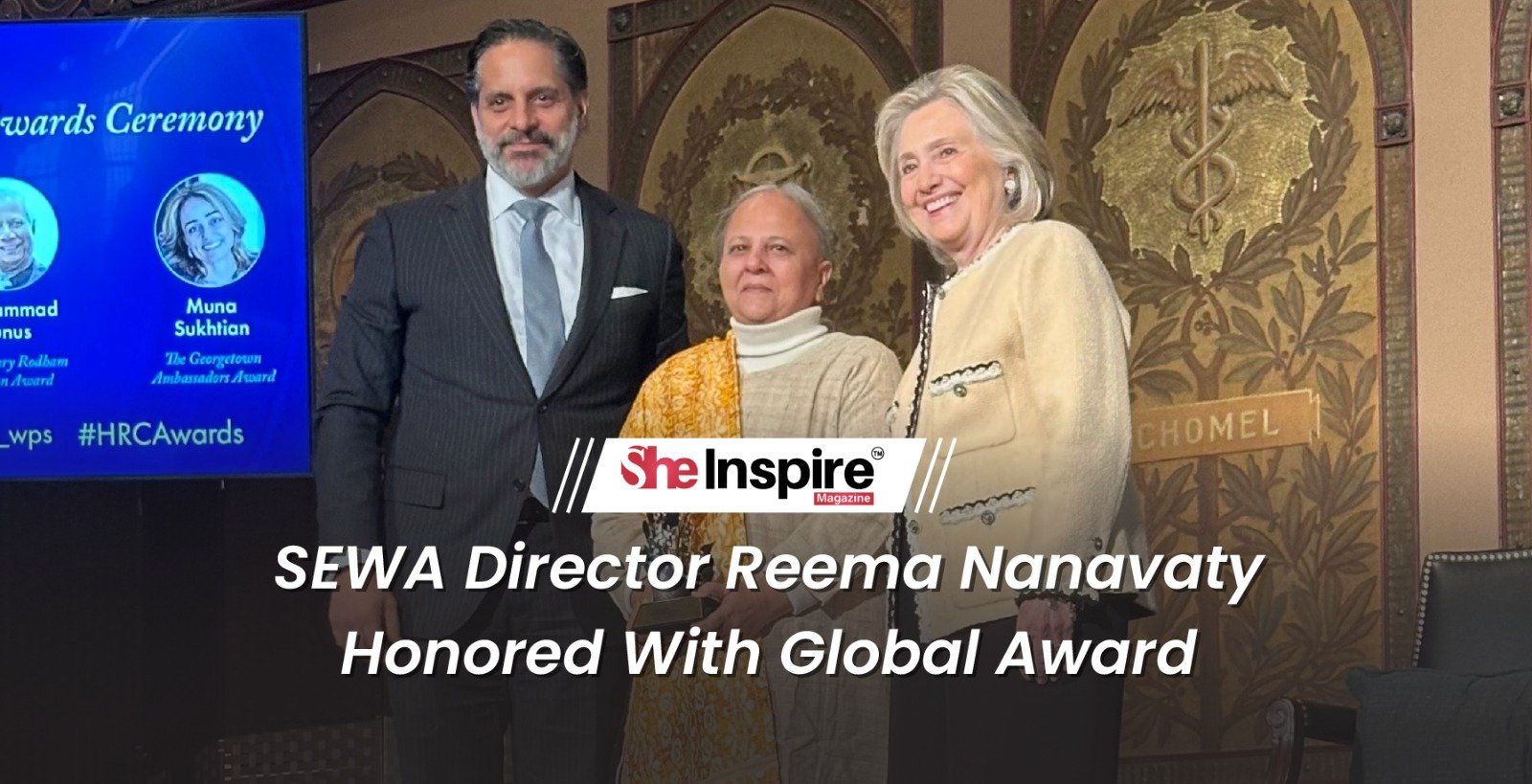
The award was presented on Thursday, October 15, in Georgetown University’s Gaston Hall in Washington, D.C., when Hillary Rodham Clinton bestowed the Hillary Rodham Clinton Award 2026 on Reema Nanavaty, the head of the Self-Employed Women’s Association of India (SEWA). In this event organized by Georgetown University’s Institute for Women, Peace and Security, the theme is that better economic prospects for women contribute to peace and security. Nanavaty is one of three recipients, along with designer and philanthropist Tory Burch and Nobel Prize winner Muhammad Yunus.
The Union That Women Built for Themselves
SEWA was founded in 1972, by Ela Bhatt, as a trade union of women workers operating in the informal sector of the economy. In the hands of Nanavaty, SEWA has become the biggest trade union of informal workers in India. This may sound rather boring, but it involves vendors, home-based workers, farmers and others who earn their living without having the contracts, pension plans and other benefits expected by many salary workers. These workers have never been consulted on how the economy treats them. The main principle is organizing these women in their neighborhoods.
Nanavaty herself has pushed that idea into new territory. She started SEWA’s food security programme, which reaches one million households, and she leads the Hariyali Green Energy and Livelihoods Initiative, which ties renewable energy to women’s incomes, and she received a Padma Shri in 2013. She has also helped women rebuild their lives after disasters and conflicts, which fits the institute’s focus on peace and security.
Why a Peace Institute Honoured a Livelihoods Union
It may seem odd at first that an institute devoted to peace would honour someone whose daily work is about incomes, food supplies and clean energy, but this year’s theme answers the question directly, since the institute describes economic opportunity for women as something that strengthens the prosperity, stability and security of their communities. The Georgetown Institute has given these awards since 2014 for leadership that advances women’s rights and a more secure world, and putting women’s economic empowerment alongside other forms of peacemaking says something about where the field is heading.
Earlier recipients have included William Hague, honoured in 2014 for steering Britain’s initiative against sexual violence in conflict, and Miriam Coronel-Ferrer, recognised the following year as the first woman chief negotiator to sign a comprehensive peace agreement, so a union organiser joins a list that has included diplomats and negotiators.
For the women SEWA serves, the honour is less about a ceremony in Washington than about being seen at all by a wider world. At She Inspires Magazine, we hope the recognition brings more attention, and more lasting resources, to the women who work without a safety net.