SC Steps In To Protect Rights Of Muslim Women
Q
Imagine a woman in her late forties who has spent the past three decades taking care of her home, her children, and preparing a budget without earning a penny for it. Now that she is divorced, she has no income, no property in her name, and a justice system that has always left her confused about which door to knock on. This image is not far from reality for most Indian Muslim women, which is why there is an increase in searches related to Muslim women’s rights in the Supreme Court every time the court speaks about it. Behind the headlines sits a plain question India has been circling since 1985: when a marriage breaks, who is responsible for the woman left standing?
A Right, Not a Favour: How Maintenance Changed Hands
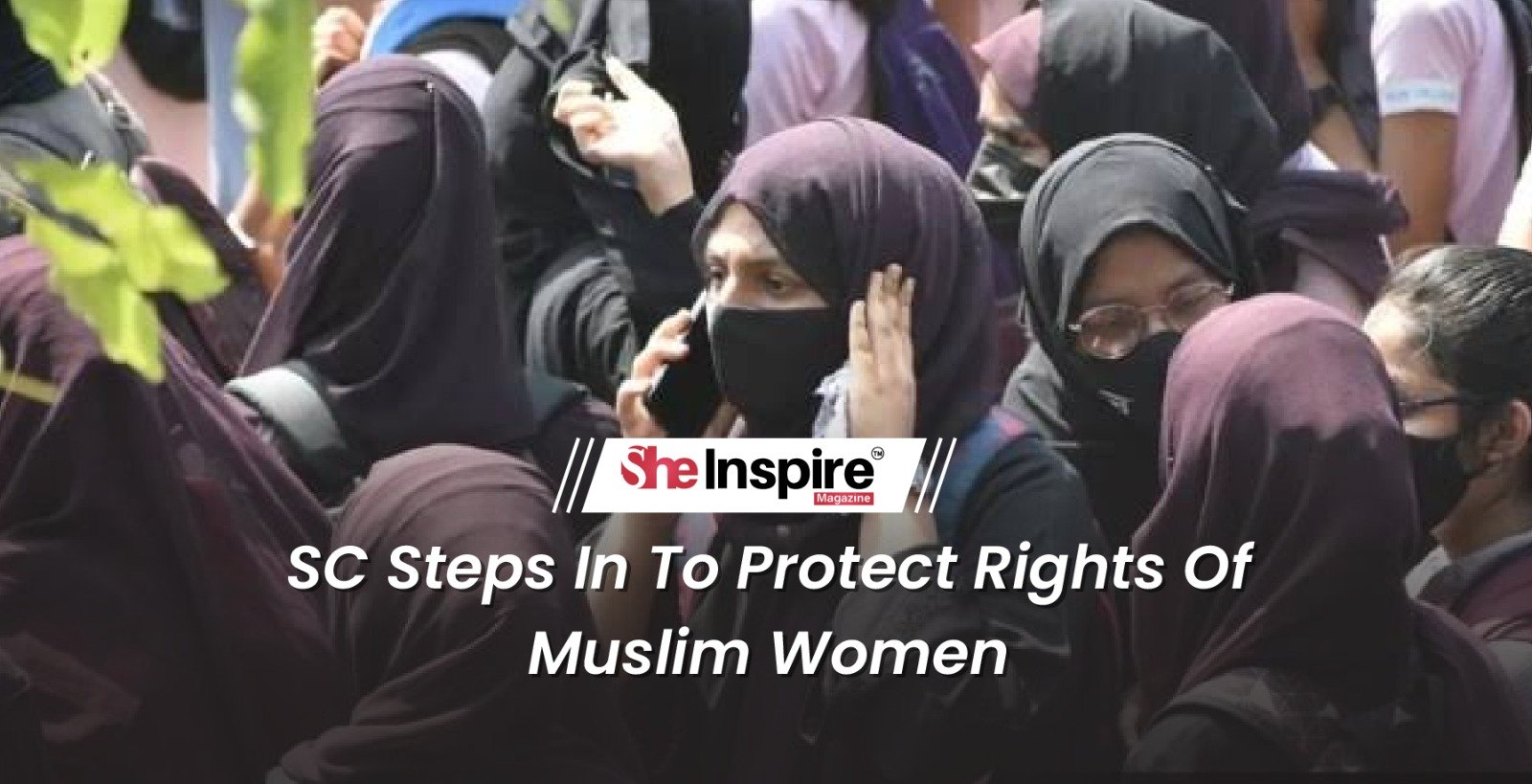
On 10 July 2024, in a unanimous decision by two judges, Justices B.V. Nagarathna and Augustine George Masih, it was established that the right to maintenance provided by Section 125 of the Criminal Procedure Code applies to any married woman, including Muslim women. It is necessary to mention the nature of maintenance because,e according to the ruling, it is an obligation but not charity, and the efforts of housewives, which are not rewarded financially,y are recognized. It is interesting that the upcoming Chief Justice of India, B.V. Nagarathna, who will become the country's first female head of the judicial system in 2027, signed this order. To better understand the relevance of the issue, it should be remembered that the famous Shah Bano case of 1985, when the court decided in favor of giving maintenance to a divorced Muslim woman in accordance with Section 125. In 1986, this decision of the court was responded to by a special law for divorced Muslim women, and for the next forty years people discussed it.
The court answered that it had not. The 1986 Act does not deprive the rights of the divorced Muslim women under Section 125, and the two acts can be applied concurrently to ensure that the woman gets protection under both. Simply put, the maintenance claims of Muslim women under Section 125 are on par with those of any other wife: a divorced woman who cannot maintain herself can apply for maintenance from a magistrate without proving that her religion allows it. However, as lawyers would tell you, a favorable judgment is just the beginning of the process. There are endless delays; husbands either run away or claim poverty, and most women are unaware of this possibility. The District Legal Services Authorities provide free legal services to women, and a visit there is more helpful than several forwarded messages.
Talaq, Inheritance and the Questions Still Waiting
Along with this ruling came yet another judgment. Back in 2017, India's Supreme Court struck down instant divorce as unconstitutional. Two years later, Parliament officially passed the Muslim Women Act of 2019, making the practice completely illegal across the country. The criminal penalty in that law remains debated, but the idea that a marriage should not end through a single spoken sentence is now firmly in place. Taken together, these moves sketch a slow march toward gender justice in India, with courts and lawmakers stepping in wherever a woman’s security rested on one person’s word. The pattern is far from complete, and the newest chapter concerns property rather than divorce.
The Supreme Court of India on 23rd September 2026 directed the Centre to reply to a plea regarding the inheritance laws for Muslims that are not codified. The plaintiff claims the practice of giving daughters half of what sons get as inheritance is gender bias and demands equal rights to ancestral and family property. Let it be clear, the court has served a notice to the Centre and will hear the petition, but no decision has been made yet. Those in support of reforms consider it necessary to test the principle of equality laid down in the Constitution. But others feel that personal laws must be reformed within communities or by parliament and not in courts, and women also differ in their views. Both positions belong in an honest picture, and the court’s reasoning, whenever it comes, will matter as much as its verdict.
What unites these cases is neither a big headline nor the everyday reality. Rights that appear in judicial decisions do not serve the woman who needs to decide whether to go out of the miserable marriage, or the girl who wants to know whether her family house will ever bear her name. They become relevant when women get to know about them, understand them, and realize they can be applied. This is why such stories of inspiring women in India should be featured in this space, and we will continue to follow the women, lawyers, and judges who transform legal language into protection for people.