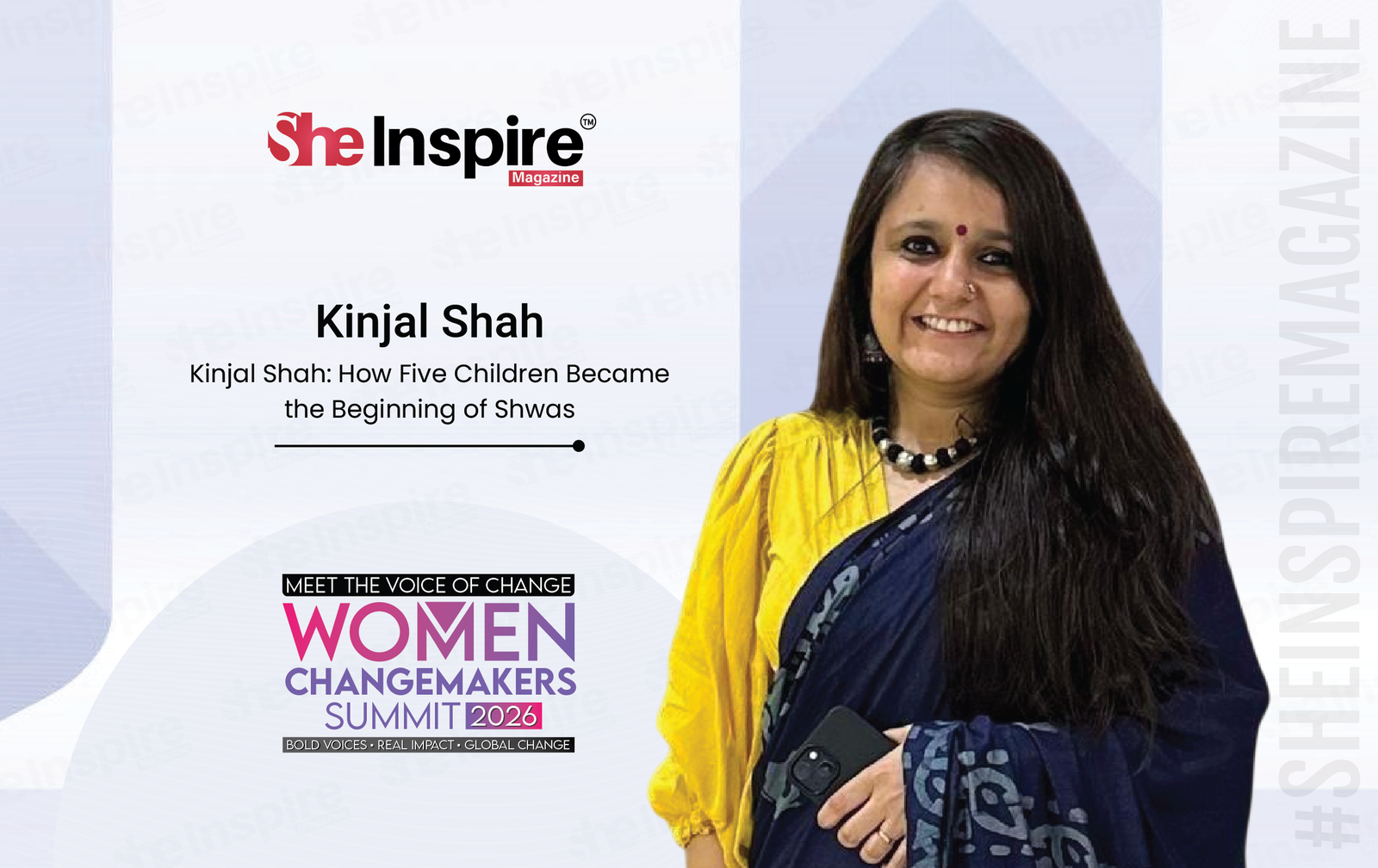
Kinjal Shah: How Five Children Became the Beginning of Shwas
A Different Path After Engineering
After studying biomedical engineering, Kinjal Shah began working in a field quite different from the one she had trained for. In 2008, soon after completing her studies, she started teaching five children. That small beginning eventually grew into Shwas.
There was no office or team at the time, and no funding plan in place. Kinjal began with the children who needed help and committed herself to teaching them regularly. She called the initiative Shwas, meaning “breath”.
Learning From the First Five
Kinjal worked closely with the first five children, and it didn't take long for her to see what they were missing. They could learn just fine. They simply needed more time, more support, and more access to books and English practice.
“I didn’t set out to build an organisation. I just couldn’t walk away from those five.”
As parents told others about the classes, more children began attending. Shwas grew gradually through these conversations within the community.
Registering Shwas as a Trust
Kinjal kept at it for five years. In 2013, Shwas was registered as a charitable trust, and she became its Founder and Trustee. Being registered made it easier to find support and plan ahead. The goal was still to help children learn, but now Shwas could take that work to more communities.
Learning Close to Home
Shwas now runs more than 55 community learning centres across Gujarat, Rajasthan and Maharashtra. Its work has reached over 5,000 children.
The centres are located within the communities they serve, making them easier for children to attend. Parents can also see the work taking place and stay connected with their children’s learning.
Most of the children are first-generation learners, the first in their families to receive formal schooling. They may have little help with schoolwork at home.
The centres provide support in four areas:
- Foundational education : Helping children build confidence in reading, writing and maths as well.
- English : Growing & improving their language skills, which can open doors to further education and work later on.
- Digital literacy : Getting children comfortable and at ease with computers related scope.
- Skills and exposure : introducing children to people, activities and possibilities beyond what they see everyday life.
This exposure is part of the learning process too. Meeting people from different professions can help children understand the choices available to them and begin thinking about what they would like to do.
An Engineer’s Approach to Education
Kinjal brings a practical approach to running Shwas. She looks at whether a teaching method is helping children, whether it can be used in another village and what needs to change as more children join.
“Good intentions are not enough. If it only works when I’m in the room, it isn’t a system yet.”
As Shwas expanded, this approach helped it carry useful practices from one centre to another. Each centre also needed adjustments to suit the community around it. Growth meant finding ways for the work to continue beyond Kinjal’s direct involvement.
The Work Over the Years
Kinjal has worked in education for over 17 years. Progress takes time, and not knowing where funding will be coming from makes things tough. Still, she keeps supporting the children, even when it takes years to see the results.
Her win at the Women Changemaker Awards 2026 West Zone recognises this commitment. Kinjal credits the teachers, families and supporters who have helped build Shwas over the years.
Reaching More Children
Kinjal’s next goal is to reach 50,000 children. Achieving that will require more trained teachers, partnerships and donor support. It will also depend on communities taking an active role in running and sustaining their centres.
The scale is much larger than it was in 2008, but the purpose remains closely connected to the needs of the five children she first taught.
“Where a child is born should not decide how far they get.”
Advice for Women Who Want to Start
For women considering an initiative of their own, Kinjal’s advice is to begin without waiting until everything feels ready. When Shwas started, she did not have a full plan, funding or a building. She began by teaching five children and continued as the work grew.
She is now working towards the next stage of Shwas, building on the centres, relationships and experience developed since those first classes.