
Delhi Police deploys an all-women Pink Force for street safety.
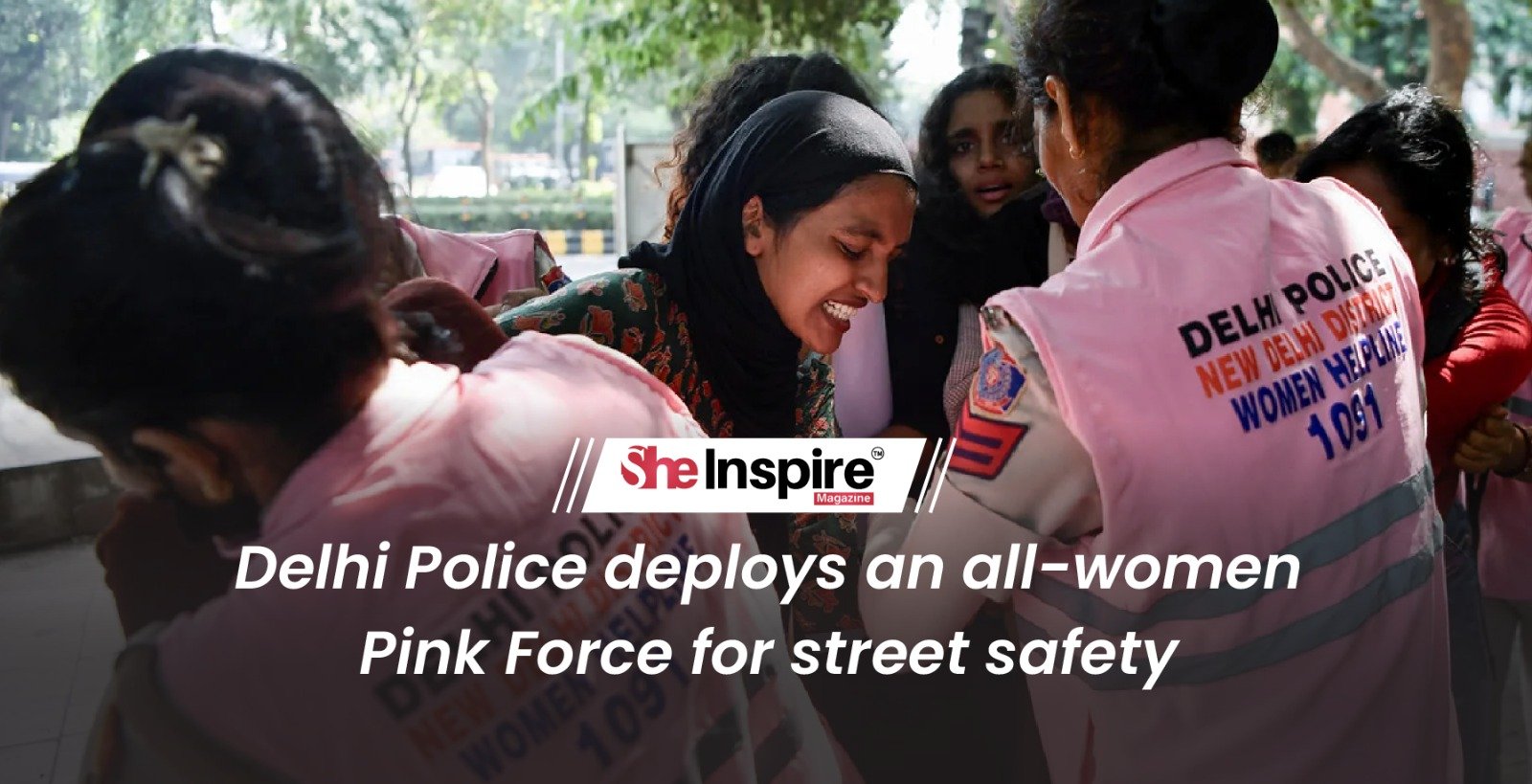
Delhi Police’s all-women Pink Force has taken to the capital’s streets and the core motive behind it is easy to state. This idea is about putting trained women officers where girls study, travel, and wait, making them easily accessible and ready to take action whenever something goes out of the picture. However, it would be too early to state whether that is enough to change how safe Delhi feels, and this is a bigger question. Public concern spiked after four cases of sexual violence against minors left everyone speechless within two weeks. A day after a terrifying gang-rape of a 17-year-old in a public park in Kalkaji, on 22 September, Lieutenant Governor Taranjit Singh Sandhu visited police headquarters and told officers to raise a dedicated Pink Force. He said women’s safety was non-negotiable, and that women must be safe on every street at every hour.
He made it clear that women officers will focus on key locations such as school gates and metro stations, especially during working hours. The police are adding more foot and bike patrols, while at the same time, each district was asked to run school safety programs and track public complaints digitally. He also highlighted that the model was Goa, where the police launched their own Pink Force in December 2021. The unit’s first major outing came on Saturday, 10 October, at Jantar Mantar, rather than outside a school gate. There were over 35,000 police officers and paramilitary personnel on duty, including officers in pink vests. Police said that women officers were needed because female staff were harassed during previous protests, yet the statement has not been independently verified.
It is a smart and sensible move to use women officers to handle women in a crowd, but it is not the job the unit was announced for. The basic details about the unit, such as its total strength, official launch date, or specific district schedules, are yet to be released by the police. This is not the first time Delhi has tried all-women units. The city launched a trial with five women-led PCR vans in 2016, with research later confirming that in most of the cases women felt more comfortable opening up to women in uniform.
In March 2018, South Delhi launched a squad of twelve women riding eight bikes through crime-prone areas. Lucknow launched its Pink Patrol in 2020, with about 250 trained women personnel connected to the nearest police station and emergency helplines. Delhi is attempting to bring such efforts under one dedicated structure. Women officers on the street are only as effective as the system around them. Open Magazine put the obvious question plainly: will more women police officers automatically make Delhi safer? The wider package suggests the answer is no, since the same order also covers patrolling, school awareness programmes and complaint tracking. Officers need dependable transport, proper backup, and a quick, clear pipeline connecting a woman's call to immediate police help. Lucknow’s model, which ties patrols directly to its helplines, shows what that connection can look like.
Delhi already has some of this machinery. Operation Shishtachar, the anti-harassment drive, uses district squads that are meant to include plain-clothes women officers who can spot and deter offenders without drawing attention. The Pink Force is meant to sit alongside that work rather than replace it. What it adds is visibility: the LG’s order calls for high-visibility deterrence, and pink vests are hard to miss. So how should Delhi judge whether the Pink Force is working? It will not prove the unit works by simply posting a few staged photos of officers in pink vests standing outside metro stations. The real test is about response speed, whether crime near student hubs truly goes down, and whether women feel confident enough to approach these officers for help. That last point matters more than it sounds. A woman constable on an earlier pink-scooter patrol team in North-East Delhi said the colour was chosen so that women could approach officers without hesitation.