
Women’s Safety: A Right, Not a Privilege
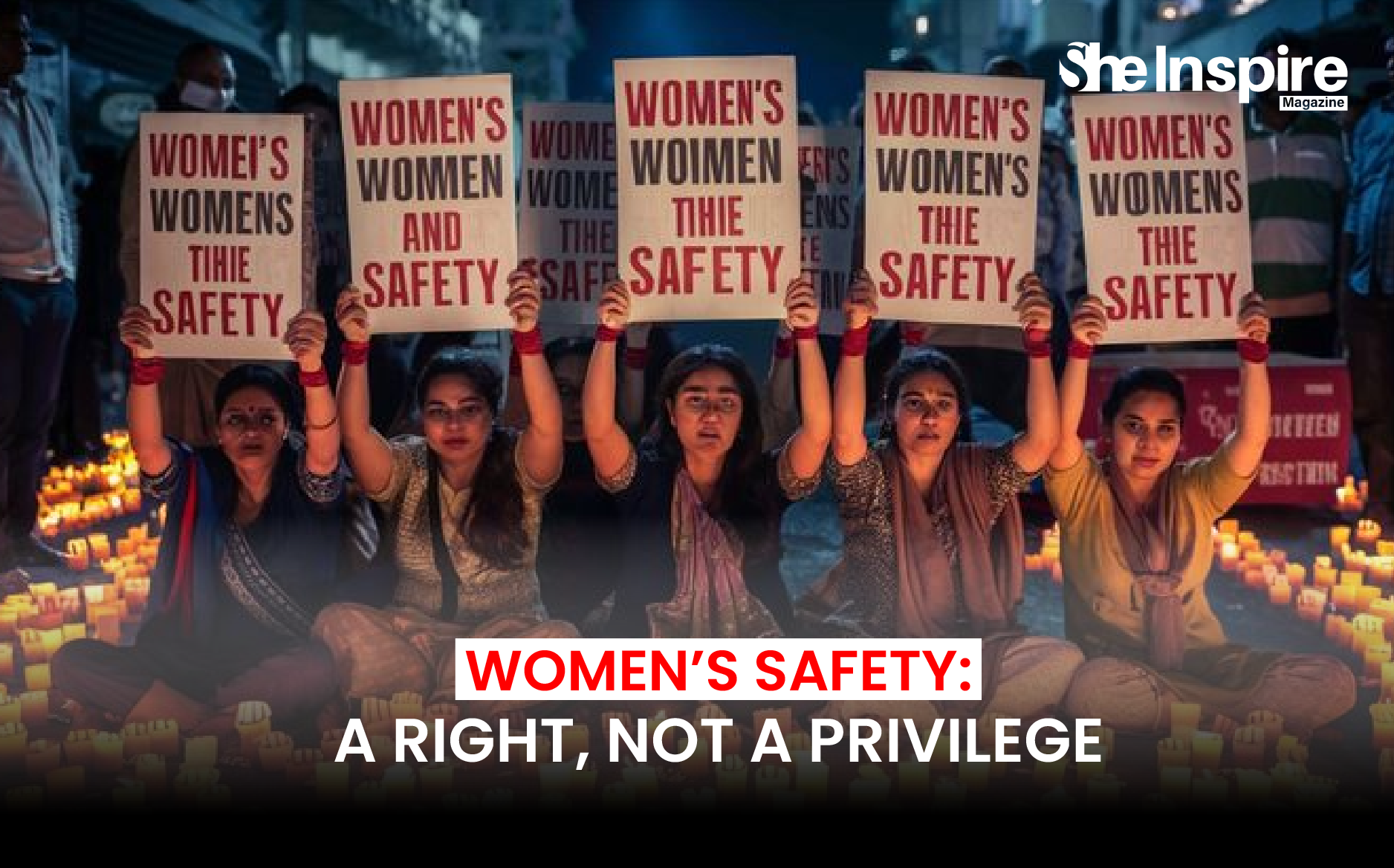
Safety of women has much more to do than laws and the response of the police. It is like the way a woman experiences when she walks into a street, is waiting to get a transport, going to the restroom when she is in a workplace, or riding on a bus at night. A feeling of being unsafe does not necessarily arise because of a crime being perpetrated - it usually arises because of behaviours which indicate disrespect, intimidation or non-cooperation.
The crimes committed against women are still high in India, according to the statistics it was almost 4.5 lakh in 2023 only, which were registered by the official constitution. These crimes encompass a plethora of crimes like assaulting, Molestation, rape, kidnapping, dowry deaths and so on. The most recent data indicate that there were approximately 29,670 rape and 83,891 cases of assault in the same year. However, such figures are just estimates of what has been recorded - analysts believe that there are many cases that are not reported because of the potential of stigmatization and retaliation or the litigious nature of the whole process.
Along with crimes that men commit directly, numerous women are being harassed at the most basic level of making unwanted remarks, staring, or catcalling. In recent times, a video recorded in India depicts the catcall of a woman along her way to a temple and the whole country has been talking about it due to the prevalence of such harassment that remains an uncomfortable element of everyday life.
It is also necessary to note that not every experience can be covered by statistics. It has been discovered that up to four out of ten women in urban centers do not feel safe particularly during the evenings or in secluded places.
The Multiple version of Unsafe Experiences:
Sexual Assault and Rape:
One of the greatest threats to the safety of women is sexual violence. Even after tightening of the laws against rape and sexual assault, inspite of years, there are numerous such cases that have been concealed by shame, fear, or distrust of the system.
The latest news articles indicate some shocking instances of how women can become victims: in Surat, a female citizen was supposedly tempted by an invitation to work in a certain position and was raped in a construction site, which led to the development of a criminal case.
Such examples make us remember that attacks may also take place in circumstances that seem to be safe or reliable, and this fact makes awareness and care even more significant.
Harassment and Objectification:
Objectifying behavior such as catcalling, comments made regarding a woman and her body or clothes, or stopping someone to comment may seem insignificant to some people, but the message is not good: women are not free to move around without objections or criticisms.
Such behaviours are not only irritating to the ladies, but they are also contributing to a culture where disrespect is the order of the day and it is now easy to take things too far.
Molestation and Unwanted Touching:
Molestation is the use of physical contact or actions that disturb an individual and make him/her feel awkward or offended. The number of molestation issues has been on the rise in most of the cities. Indicatively, in Pune, the number of rape as well as molestation cases was increasing every year.
These incidents render the open areas such as parks, buses, and streets to appear unsafe to women and young girls, particularly the young women.
What Made these Problems Persist?
When we know what causes it, we are able to get solutions.
Attitudes and Gender Norms in society.
There are ingrained perceptions regarding gender, power as well as entitlements that influence behaviour. Still, a great number of people consider women as objects or things as opposed to the individuals with equal rights. This leads to harassment, disrespect, and violence.
Such attitude as victim blaming, jokes at the expense of one another, or talking back on crude remarks are all perpetuating the culture of unsafe behaviour.
Underreporting and Lack of Trust.
Numerous women fail to report abuse/crime due to the following reasons they:
* fear retaliation,and fear to be unbelieved,
* anticipate legal proceedings, which are gradual or rough,
* or feel criticized by relatives or society.
These societal obstacles imply that a significant part of incidents remains unreported in order to make the issue appear to be not as big as it appears.
Poor Awareness and Education.
An uneducated environment regarding consent, respect, and rights leads to unsafe environments. The lack of respectful behaviour in schools, families and communities that do not instill respectful behaviour leads to a loophole in the comprehension of what is acceptable.
What Steps Are Being Taken?
The attempts at enhancing female safety have originated in many directions: legal, technological, and social.
Legal and Policy Measures:
India has enhanced laws against sexual crimes, domestic violence and abuse. The government has also established helplines such as 181 and dedicated certain funds such as Nirbhaya fund to promote safety programs.
Improved response to crimes and fast registration of complaints are also being pigmented by the law enforcement agencies.
Surveillance and Technology:
Some cities such as Delhi are putting tens of thousands of CCTV cameras to check on the citizens and control crime.
In the same vein, body cameras are being deployed in other areas such as the beach resorts such as Goa, where lifeguards are being used to curb harassment and even aid in documentation where necessary.
Community Awareness and Community Support:
Social media, awareness and discussions with the people make attention draw to the common harassment that was not perceived before. When Female bloggers such as those in the viral video share their stories, it helps others open up and forms an external force of change.
Organisations also strive to assist survivors, educate populations and use respectful behaviour.
The Safety tips Every Woman can follow:
- Women should not be subjected to blame over the harm they endure; it is always up to the offender. Nonetheless, one can have some practical steps helping to mitigate the risk and buy some peace of mind:
- Stay Aware of Surroundings; Staying vigilant to the things that are going on around you either on the street, on public transport or in the crowds makes it easier to note and prevent uncomfortable situations as they come along Share Your Plans
- Trust a friend or relative with the information of where you are going, who, and when you should come back. This forms a security blanket whereby other people can intervene on your behalf in case of need.
- Use Safety Tools and Apps: Numerous applications on the phone and various smartphone functionalities will enable you to share your whereabouts, make alerts or even dial the emergency numbers directly in case you are threatened. Emergency services in India such as line 112 and other women specific call centers will help you get direct assistance.
- Remain In Light, Windy, Spaces; Brightly lit places that are crowded will act as a warning to the wrongdoer as compared to lonely or dark environments.
~ Women’s safety is not just a women's issue - it is a human issue and it is time we all take responsibility for change.