
Still Judging Her Clothes? Women Tired of Moral Policing
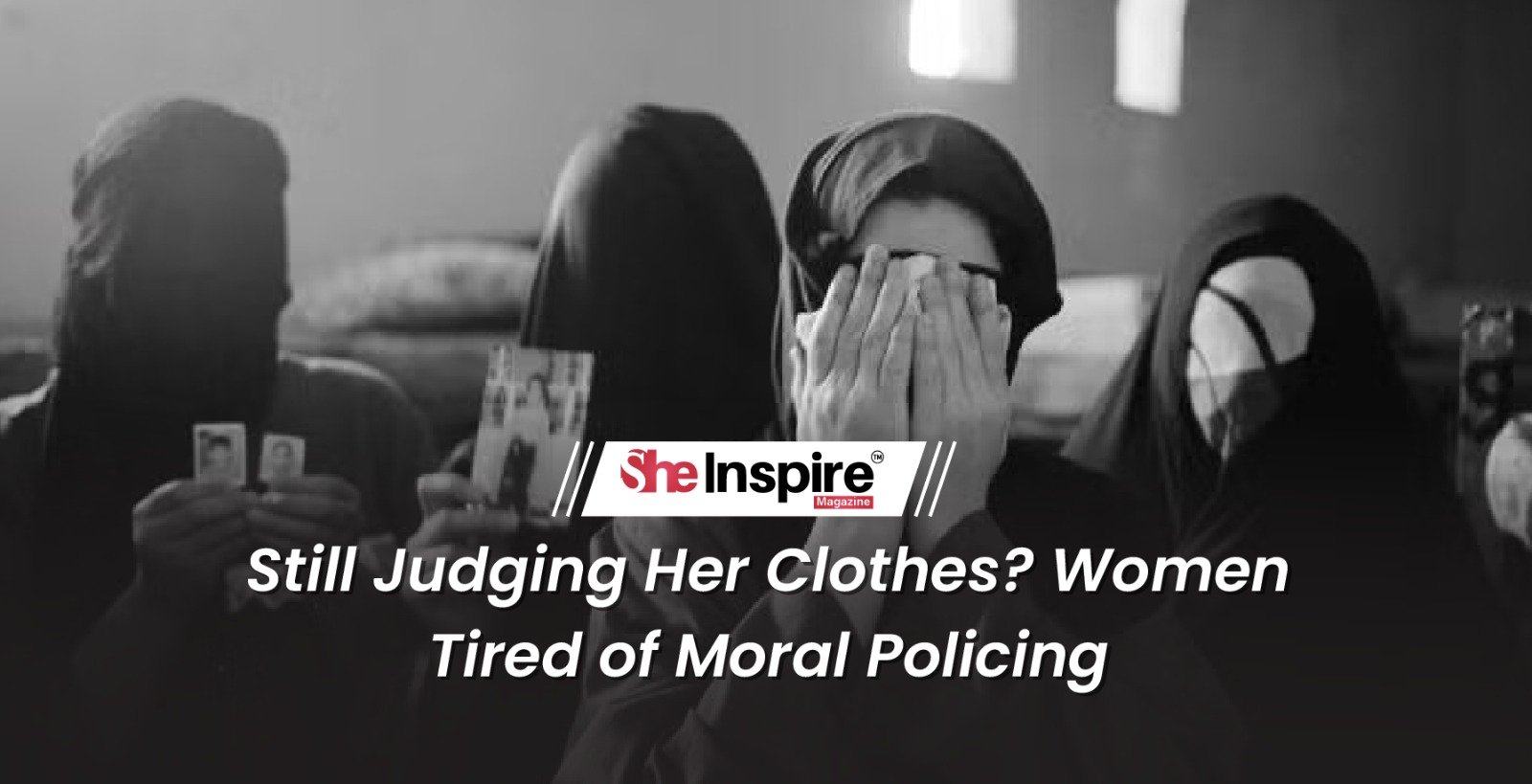
Somewhere, even today, ask an Indian woman about the first time some stranger commented on her clothing, and you will most often get a little, not-a-laugh as a reply. It was one at a wedding who appraised her from head to toe, a guard at college gates who 'measured' her kurta and pocketed the scales, a family relative who decided her shorts were okay at home but not when out, a man on the street who knew a sleeveless top invited his comments. The details change from one city to the next, but the feeling stays the same, a quiet understanding that her body is a matter for public discussion. That understanding is being challenged, aloud, louder now this year than in a long time, by students, by writers, by women with phones to their faces, by families sick of watching their girls contract themselves so the rest of us can breathe easier.
College Gates to Social Feeds, Same Old Limits
A few examples from campuses are most striking this year. When St Stephen's College in Delhi instituted a ban on shorts in classrooms, the library, the chapel, and the dining hall, dozens of students stormed the college in shorts the very next day, and in a petition signed by several students, student groups reasoned that a college should be a space which questions ideas of modesty rather than reiterate them. Next week, college students came in shorts and protested the ban while wearing them, and one of them said that a library wanted "quiet minds, not uniform policing." A few months earlier, a writer at Feminism in India looked at how clothing rules in schools and colleges are defended as safety measures, after a law university's vice-chancellor was reported to have said that women students in shorts invite harassment. The trouble with that reasoning is easy to see once it is said plainly: harassment is done by the person who harasses, and a rule that tells women to cover up quietly tells them that it was their fault all along.
The police outside the campus grounds behave differently but are effectively the same. In Punjab, groups of men who call themselves Nihangs have been reported confronting women in sleeveless clothes, questioning couples and objecting to videos on social media, and the police described one killing linked to online content as the result of unauthorised moral policing, while a senior figure from the community said that genuine Nihangs do not behave like this. That happened one year ago, when men entered a Miss Rishikesh rehearsal and told off Westerners for damaging local culture. It is not always said out loud, and that is the hard part with this control. One legal writer put it like this: it hides behind nice words like modesty, dignity, family values, and culture, and a girl from a "good family" is just supposed to guess what to wear around elders, at night, or at a temple even when nobody gives her a rulebook. That is how moral policing of women keeps going, since it often feels like advice from people who care, right up to the moment she disagrees.
Safety Is Not a Smaller Wardrobe
The strongest reply from women is also the simplest one: that women's clothing choices have never been the reason anyone gets harassed. When thousands of women and students marched in Delhi this year, they demanded to study, work and travel without fear of sexual violence, and commentators pointed out the old pattern in which a crime happens to a woman, and she is the one who ends up with a new set of rules. Writing in Outlook, one journalist noted that after a series of assaults the usual reaction came back, which was to restrict women's movement, so that the question quietly changes from how to make a place safe into how to keep women away from it. When Lady Shri Ram College students marched on September 23, that was the exact answer. A decade ago, women at Delhi University rallied behind the Pinjra Tod movement against unequal curfews and moral policing, and the fact that young women are on the streets again with much the same demands says a lot about how little has moved.
It's all recorded on paper, but not very clearly. The text in a nutshell: There is protection for expression and personal liberty under the Constitution; the privacy of clothing selection is definitely also protected and, since there is no law to act as a moral police, it occurs. Any dress code for women that is made in the name of safety should be able to explain why it does nothing to stop the people who actually cause harm, and so far most of them cannot. Social media has also made the whole thing faster and louder, since a single offended group can turn an opinion into a veto, as one LiveLaw writer noted about an advertisement that vanished for everyone because some people wanted it gone.
This does not mean that women are requesting something extraordinary. Most of them are asking for women's freedom to dress the way they please without preparing an explanation before leaving the house, and for the adults around them, at home, in college offices and on the street, to find other things to worry about. The change may well begin in small places, where a mother stops saying "log kya kahenge" about a daughter's kurta, or a warden decides that checking hemlines is not part of her job, or a brother says out loud that the man who stared is the one at fault.