How Neena Gupta Ended a Decades-Long Math Standoff
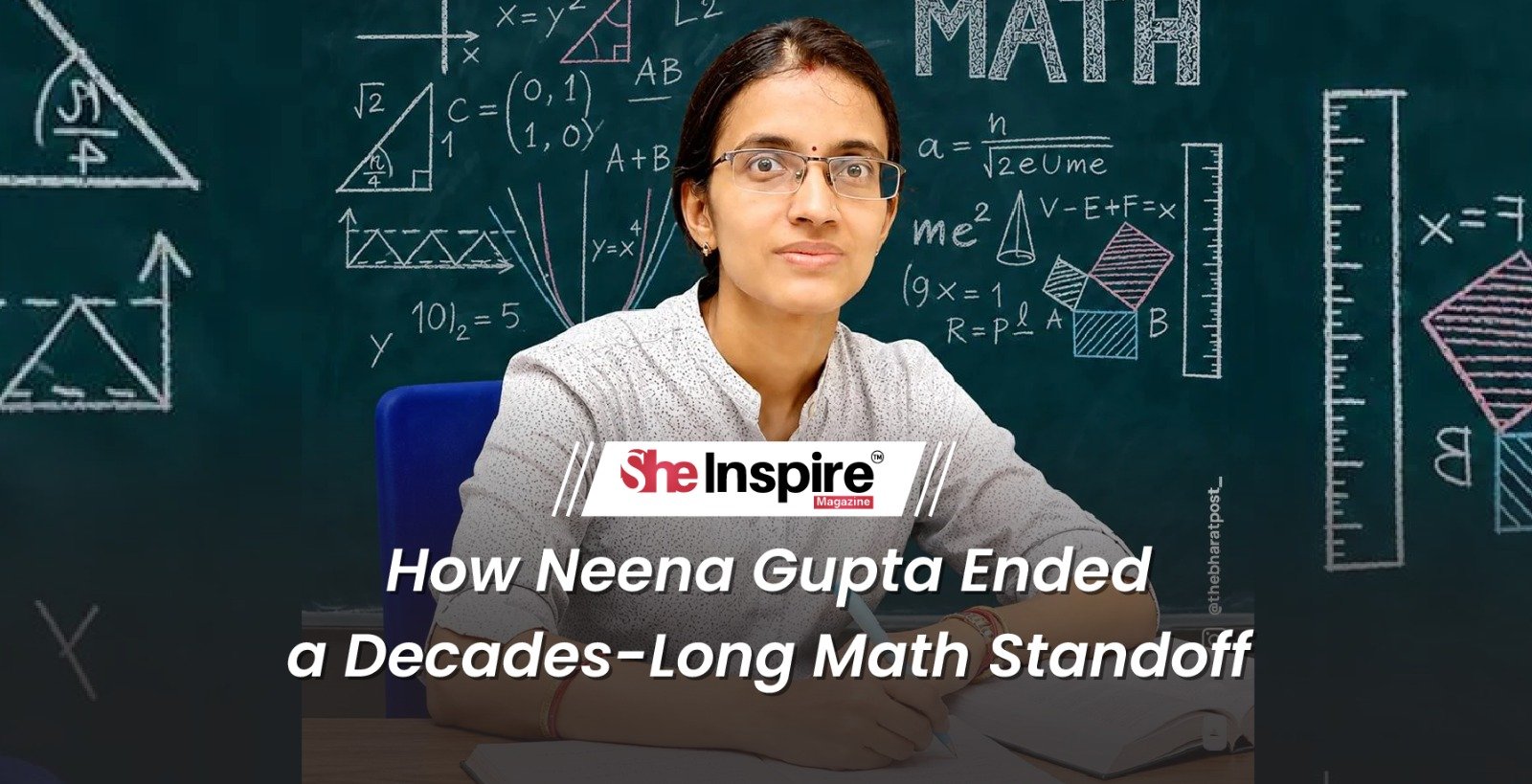
Most people lose hope of an answer when a problem drags on. Oscar Zariski first came up with the Zariski Cancellation Problem in 1949, and that was one of them. In 2014, a young researcher from Kolkata named Neena Gupta did what had looked out of reach, and twelve years later her work has earned her a place on TIME100 Next India 2026, in the health and science category of the magazine's first India list. Gupta is now a professor at the Indian Statistical Institute in Kolkata. She did her undergrad at Bethune College first and then went to ISI for her master's and PhD. That problem stayed in her head while she was a student, showing big ideas can start in really ordinary rooms. Roughly speaking, the question asks whether two shapes that look the same after each gets one extra dimension must have been the same all along, and her answer, in fields of positive characteristic, was no.
Awards, Doubters and an Open Question That Still Remains
Her proof was a counterexample, a clean and surprising one that showed the guess did not hold in that setting, while the version in characteristic zero is still open today, so the story is not finished. The honours arrived one after another, with the INSA Young Scientist Award in 2014, the Shanti Swarup Bhatnagar Prize in 2019, the Ramanujan Prize in 2021 and the Infosys Prize in 2024. Her mark is evident in more ways than one, too, because researchers at her future institute had actually built two new groups of counterexamples on top of her foundation, which is a way the mathematician's ideas continue to spread long after the paper is published.
Why Her Story Matters for Girls Who Love Numbers
For a girl in India who enjoys mathematics, the path to a research career can look lonely, since women remain rare at the top of pure mathematics and few of them become household names. Gupta has discussed in interviews those who wondered if she could do it, and it's this kind of story, from her childhood math competitions to a problem that had defeated generations of professionals, that will help normalize her trajectory. The TIME honour put her in front of the whole world in a way no science journal ever could, shining a spotlight onWomen in STEM India. It also reminds us of something important. Everyone says to hurry up, yet staying patient and curious can get you much further; also, taking your time helps a lot.