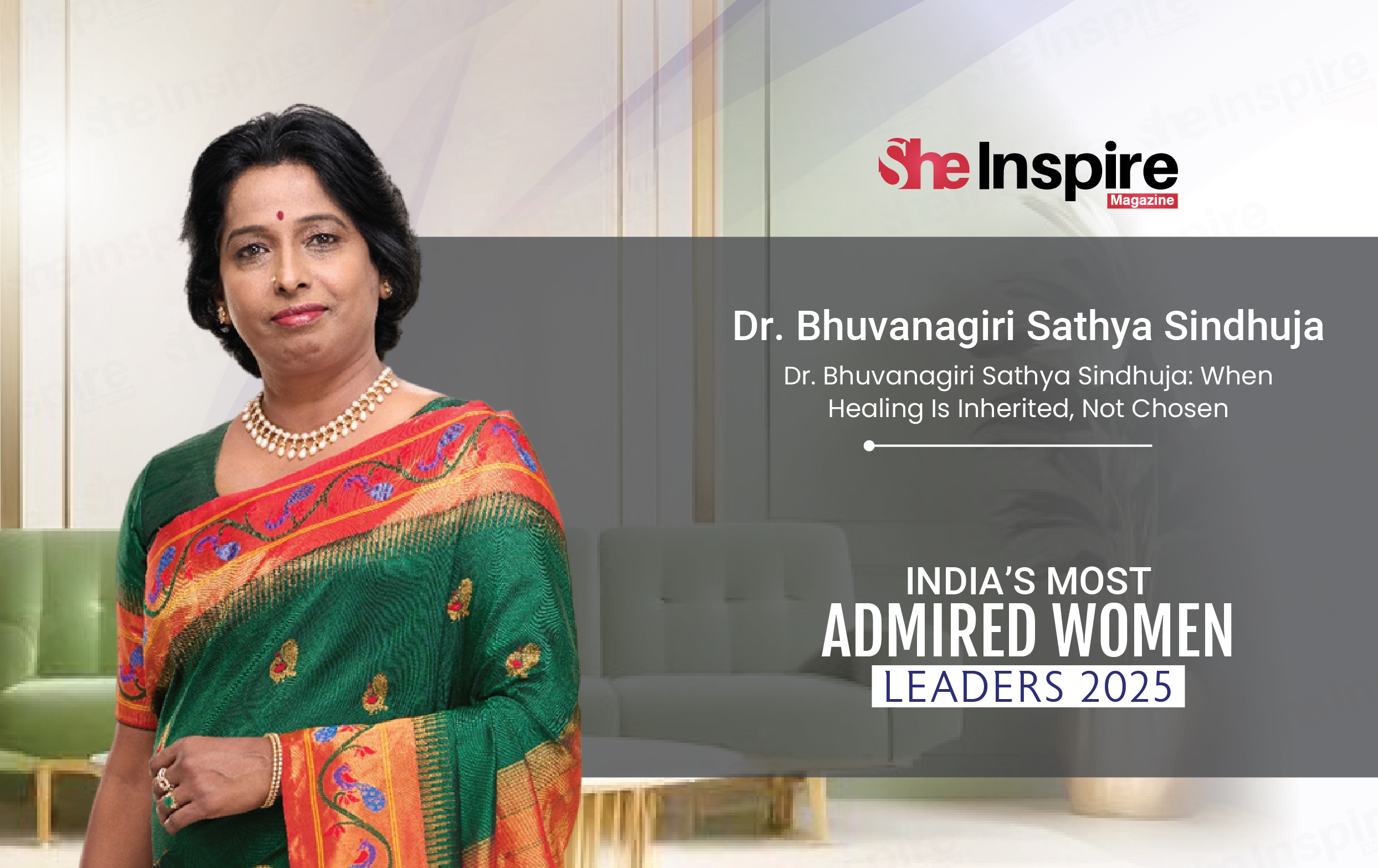
Dr. Bhuvanagiri Sathya Sindhuja: When Healing Is Inherited, Not Chosen
“Understand your body’s inner healing system. Listen to it. And remember the generations that made this knowledge possible.”
Healing Journey towards enlightenment
Healing entered Dr. Bhuvanagiri Sathya Sindhuja’s life long before she could name it. It was present in her home, in the quiet confidence with which her maternal grandmother treated people, and in the trust patients placed in her without question. Watching those exchanges—unhurried, deeply personal—shaped her earliest understanding of what care truly means.
Today, as a 36th-generation Siddha scholar and the Founder and Director of Chakrasiddh Holistic Healing Research Centre in Hyderabad, Dr. Sindhuja carries that inheritance forward. But she does so with intention, discipline, and an awareness that tradition must be lived, not merely preserved.
She was introduced to Siddha Vaidyam at the age of four. Unlike many who encounter ancient systems later in life, this knowledge grew with her. It became instinctive. The idea that the body holds its own intelligence—capable of restoring balance when guided properly—was not a theory she learned; it was a truth she observed daily. Over the years, formal study, research, and practice helped her refine that understanding into a structured yet flexible approach that integrates classical Siddha therapies with personalised energy healing.
Chakrasiddh today reflects that philosophy. Nearly one lakh patients have sought treatment there, many travelling from outside India. What draws them is not a promise of quick relief, but the assurance that their condition will be understood in its entirety—physical, emotional, and energetic.
Break Through Barriers
Convincing people of this, however, was never easy. When the centre began its work, traditional healing systems were often dismissed as outdated or unscientific. Modern medicine, with its immediacy, had become the default choice. Dr. Sindhuja did not challenge that dominance. Instead, she spoke quietly but consistently about complementarity. Siddha healing, she maintained, does not compete with modern interventions. It works alongside them, focusing on causes rather than masking effects.
Another challenge remains constant: no two bodies respond the same way. Even patients who arrive with identical diagnoses require different paths to recovery. Emotional stress, daily habits, and internal energy balance influence healing as much as visible symptoms. For Dr. Sindhuja, this is not an obstacle—it is the responsibility of the healer to recognise these differences and respond accordingly.
Experiences and stories resilient trust
Recognition followed gradually. Patient experiences became stories, and stories became trust. Over time, her work was acknowledged through awards such as the Times Group’s Icon in Siddha Vaidyam, the Dr. A.P.J. Abdul Kalam Award for Ancient Siddha Therapy, the ABP Conclave Award (2024), the Inspiring Woman Award (2021) presented by the Governor of Haryana, and the Global Business Achievement Award (2022). Yet she speaks of these sparingly. What matters more, she says, is when a patient returns not for treatment, but to say their life has found balance again.
At the heart of her practice lies a steady compassion. Chakrasiddh follows a clear diagnostic structure, but treatment is never standardised. Autoimmune disorders, neurological conditions, skeletal issues, and women’s health concerns are approached with the understanding that illness rarely exists in isolation. Emotional strain and energetic imbalance often run parallel.
Her engagement with Siddha science also extends beyond the clinic. Dr. Sindhuja has authored over 30 research papers in national and international journals, contributing to the academic legitimacy of ancient healing systems. She regularly conducts awareness sessions, especially in rural areas, focusing on preventive care and the importance of understanding one’s own body before illness takes hold.
One key holding in her journey
What sustains her through decades of practice is simple: trust. The trust patients place in her, and the trust she places in the body’s capacity to heal. Each recovery reinforces her belief that ancient wisdom, when applied with integrity, remains relevant—even necessary—in the present day.
Balance, in her own life, comes from discipline. She follows structured routines, protects her energy, and remains mindful of her limits. Passion, she believes, must be supported by order; otherwise, it fades. This approach allows her to remain available to patients without losing clarity or personal well-being.
Looking ahead, Dr. Sindhuja sees Chakrasiddh evolving into a larger platform—one that connects ancient Indian healing sciences with contemporary healthcare conversations. Rural health camps, participation in national and international conferences, and continued research remain central to that vision. Many of her recovered patients already serve as informal ambassadors, sharing their experiences and encouraging others to explore holistic healing.
Conclusion from experiences
Her broader aim is not merely treatment, but awareness. She speaks often about gratitude—toward past generations who preserved this knowledge, and toward the body itself, which communicates constantly if one learns how to listen.
When asked what she would tell young women, her answer is measured and grounded. Pay attention to the connection between mind and body. Practise kindness toward yourself. Rest when needed. Healing, she reminds us, does not always demand effort. Sometimes, it begins with listening.