
Could Mandatory Period Leave Hurt Women’s Careers? Supreme Court Sparks National Debate
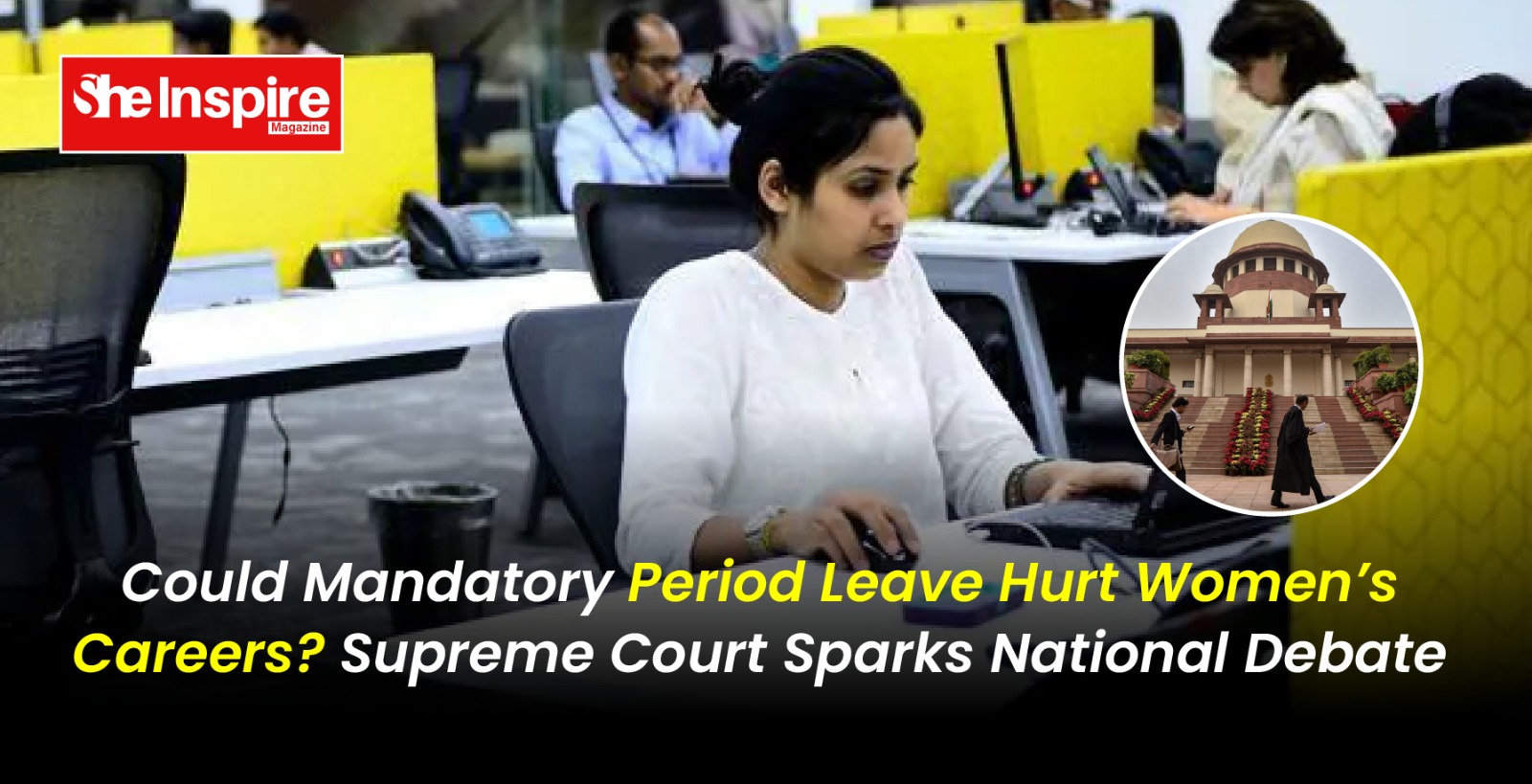
A courtroom observation has once again pushed a deeply personal women’s issue into national conversation: if menstrual leave becomes compulsory everywhere, could it unintentionally make workplaces more hesitant to hire women?
That question emerged after the Supreme Court of India observed that a legally mandatory menstrual leave framework may create unintended consequences for women’s professional advancement, even if the intention behind such a policy is compassionate and progressive. The court noted that while menstrual discomfort is real and often severe for many women, making leave compulsory by law may allow employers to quietly treat women as “costlier employees” in already competitive hiring environments.
At first glance, the argument feels uncomfortable because it places women in the familiar position of choosing between biological reality and professional equality. Menstruation is not an occasional inconvenience—it is a recurring physical experience that can involve pain, fatigue, nausea, hormonal fluctuations, and in many cases medical conditions such as dysmenorrhea or endometriosis. Yet millions of women continue to work, teach, study, commute, manage households, and lead teams through those days without any formal support.
This is why the current debate is far larger than whether one paid leave day should be granted every month.
The central concern raised by the court is not against support for women—it is against creating a policy that could deepen hidden discrimination. In many industries, especially private sectors driven by productivity targets, even maternity leave has historically influenced hiring bias. A compulsory menstrual leave policy, some experts argue, could trigger similar silent prejudice, where employers avoid recruiting women for roles seen as operationally demanding.
At the same time, women’s rights advocates insist that ignoring menstrual health is no longer acceptable. Several Indian states and institutions have already experimented with policy alternatives. Karnataka has moved toward structured menstrual leave in certain sectors, while educational institutions in Kerala have introduced attendance flexibility for students.
But perhaps the most important lesson from these examples is that leave alone is not the complete answer.
A modern workplace sensitive to women’s health must also include practical systems: hygienic washrooms, short rest breaks, flexible hours, work-from-home options where possible, and an environment where a woman does not feel embarrassed asking for accommodation. In many offices, factories, schools, hospitals and field jobs, women still hesitate to speak openly about menstrual pain because the subject remains wrapped in discomfort and silence.
For She Inspire Magazine, this debate reveals a deeper truth: equality cannot be measured only by identical rules. Real inclusion means designing systems that understand lived realities without reducing women to those realities.
Perhaps the future lies not in forcing one uniform law across every sector, but in building flexible workplace cultures where women are trusted to decide when they need rest—without fear that one biological truth will be used to question their capability.
Because the goal is not simply menstrual leave. The goal is dignity, choice, and careers that do not demand silence as the price of success.