
Deeptha Sakkarapani: Building Worlds Where Stories Come Alive
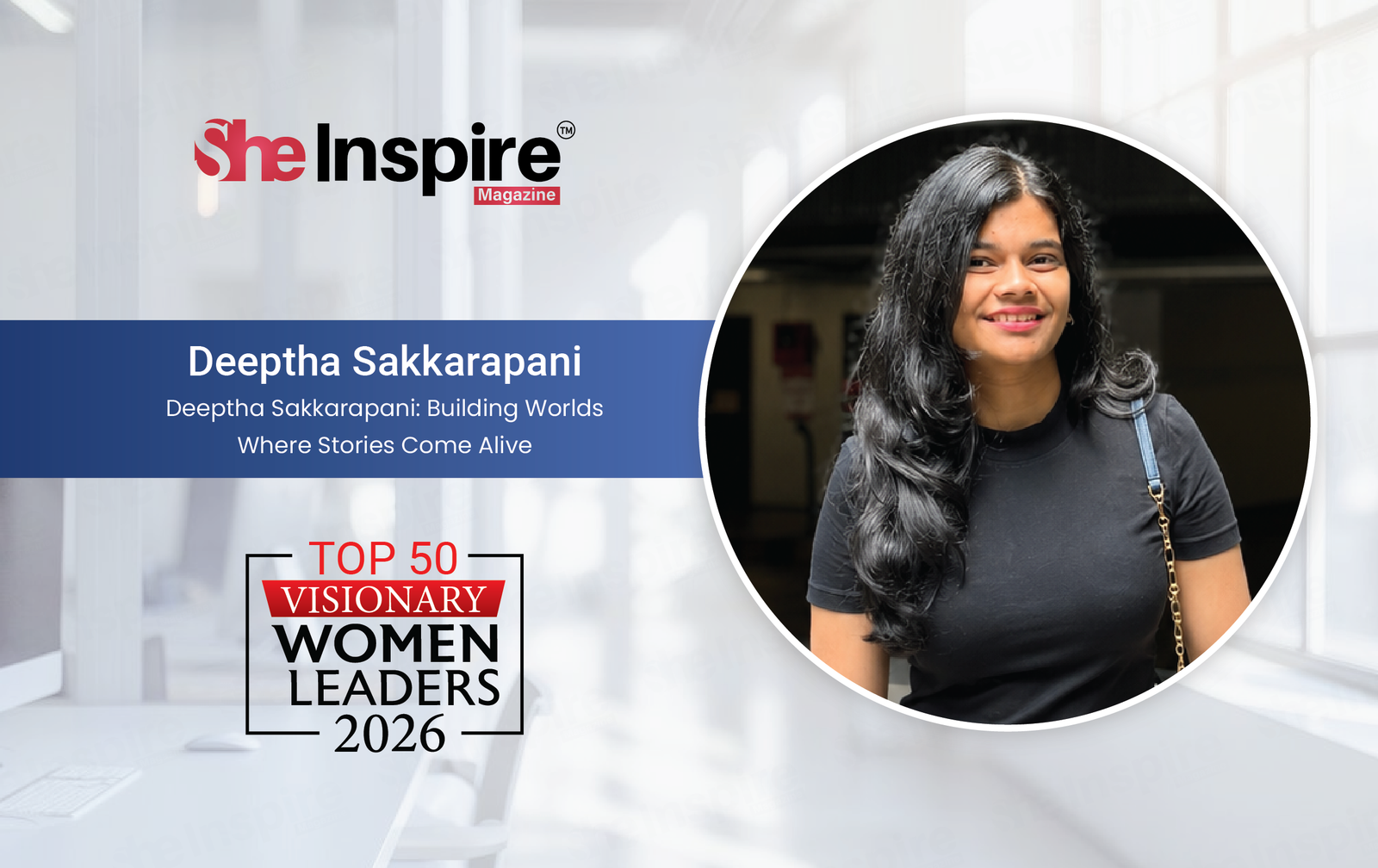
Four years ago, Deeptha Sakkarapani had an idea that sounds almost deceptively simple: build something people would still be thinking about long after they left the room. That instinct became House Off Riddles, an immersive, story-driven entertainment venture that has grown from a single escape room into a multi-format brand with a Chennai outlet and a growing slate of interactive case files. Today, as CEO of Rinds Ventures, she runs a far wider portfolio — hospitality, sports, sustainable farming — and is pursuing a Doctorate in Business Administration alongside it, which says as much about her appetite for building as any single venture could.
She is quick to frame her career less as a string of ventures and more as a single, continuous instinct. “My professional journey has been defined by turning bold ideas into meaningful businesses,” she says, “driven by innovation, resilience, and a passion for creating memorable experiences.” It is a line that could easily read as founder boilerplate, except that House Off Riddles — a business built on the unglamorous work of writing puzzles, testing rooms and managing a live experience night after night — backs it up.
A foundation built on family
Ask Sakkarapani what keeps her going through the grind of running several businesses at once, and she doesn’t reach for a management principle. She reaches for her father. His hard work, integrity and perseverance, she says, inspire her every day to overcome challenges and keep building. It is a motivation that has hardened into a working philosophy: every setback is treated less as a problem to survive and more as raw material — something to be shaped into a business, a lesson, or a better version of herself. Underneath the portfolio and the doctorate sits one unglamorous, consistent goal: creating memories for her customers that they will hold onto for a lifetime.
Growth through ownership
Sakkarapani is unusually candid about the internal work entrepreneurship has demanded of her. The real turning point, she says, wasn’t a product launch or a new city — it was learning to trust her own decisions instead of seeking approval for them. “Confidence isn’t about always being right,” she explains, “it’s about having the courage to keep moving forward, learn from mistakes, and grow with every experience.” That shift, from validation-seeking to ownership, reads like the quiet engine behind everything else she has built since.
Curiosity is the trait she returns to most when asked what has actually moved the needle on her growth — staying curious, seeking new perspectives, refusing to let herself plateau. It is also the reason she is willing to sit through a doctorate while simultaneously running a multi-venture business. Success, in her telling, isn’t something a milestone can capture on its own. “It’s measured by the lives I touch, the problems I solve, and the person I become along the way,” she says — a definition that leaves room for a legacy built as much through people as through profit.
A modern take on hustle
True entrepreneurship is about building sustainably working with intention, embracing discipline, and creating systems that succeed even when you’re not constantly chasing the next milestone.”
Where a lot of founder culture still runs on burnout as proof of commitment, Sakkarapani pushes in the other direction. Hustle, in her view, should never come at the cost of health or happiness — and she says as much without any hedging. She has little patience for grinding for its own sake, and openly prefers smart work over hard work: fewer hours spent proving effort, more spent building systems that hold up on their own. It’s advice she extends to younger founders too, with a nudge to focus on building rather than chasing trends, to solve real problems, and to trust that persistence and daily consistency — not virality — are what compound into a career.
Redefining ambition, on her own terms
A recurring thread runs through Sakkarapani’s reflections, and it has less to do with business strategy than with the story she is trying to rewrite for other women. She wants to break the idea that a woman’s ambition should come with limits, and she is unwilling to treat success and happiness as a trade-off. “I don’t believe in choosing between success and happiness,” she says. “I intend to have both, and I hope more women realize they can too.” For her, empowerment isn’t a milestone to reach but a daily practice — owning her voice, trusting her instincts, and creating opportunities instead of waiting for permission to chase them.
Her personal mantras — “one day at a time” and “build a life you’re excited to wake up to” — say plainly what the rest of the conversation implies: that ambition, for her, was never meant to come at the cost of contentment. Asked to define success in a single word, she skips the milestone and the metric altogether, and calls it, simply, momentary happiness.
Four years in, Sakkarapani’s story is still very much being written — across escape rooms and case files, hospitality ventures and sustainable farms, and a doctorate she is fitting in alongside all of it. What ties the threads together isn’t the number of ventures on her plate, but a founder who has learned to measure her work by the memories she leaves behind, the systems she builds to outlast her, and the example she sets for women who refuse to choose between ambition and joy.